
☕ Casual Game
Quick Summary
Casual Games aim for an accessible design with minimal controls and friendliness, serving a broad audience. The genre is ideal for short-term entertainment sessions and doesn’t require complex skill systems or extended committed playtime.
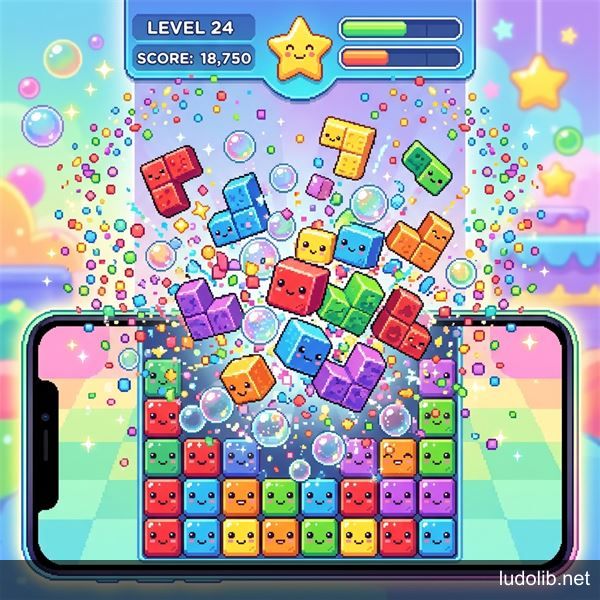
The term Casual is not used to describe a genre (Genre) with specific gameplay rules, but rather to define the Target Audience behavior and experience intensity. A Casual game (everyday/popular game) is designed with minimal controls so that players of any age can easily grasp the basic gameplay rules after a brief familiarization period, without requiring advanced skill foundations.
Core Characteristics of the Casual Genre
- Low Time Commitment: While a typical multiplayer session might bind players for 40+ minutes continuously, casual games are optimized for fragmented time windows. The basic loop typically lasts just a few minutes and participants can pause at any time (ideal for short entertainment needs).
- Streamlined Controls: Especially popular on Mobile Game platforms, casual game controls are typically limited to minimal operations (Single tap, Swipe, or Single-click).
- Forgiving Mechanics: Mistakes carry mild penalties — compensated by continuous friendly challenge cycles.
Hyper-Casual Format
During the smartphone boom, the Hyper-Casual sub-genre emerged as a specialized high-coverage segment (e.g., Flappy Bird, Helix Jump, Doodle Jump). The focus of this genre is on basic graphics simulation and a very short game loop length to maximize repeatability.
- The maximally simplified experience simultaneously establishes a high-frequency display environment for directly integrated advertising, forming an independent revenue framework from Advertising Revenue features.
Notable Casual Games
- Candy Crush Saga: A powerful defining example of the basic Match-3 puzzle design model.
- Peggle / Plants vs Zombies: Tower defense strategy games with simplified rules for quick access while maintaining underlying layers of strategic depth.