
🚪 FTUE (First Time User Experience)
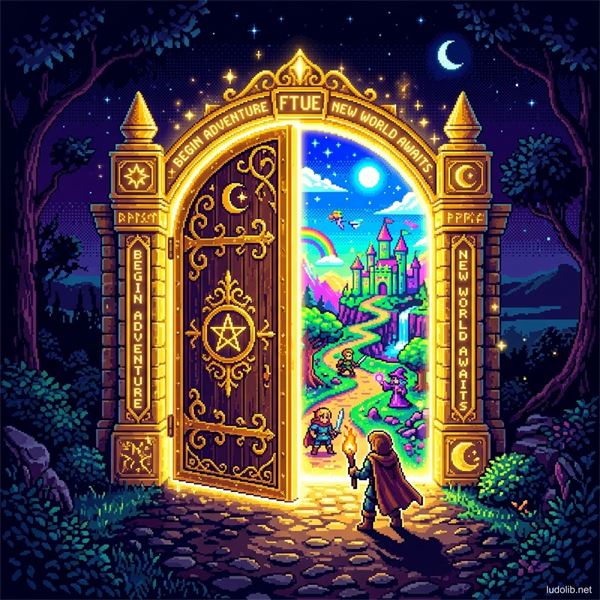 Illustration: The golden FTUE gate slightly opening — the decisive moment whether the player will step further into the magical world or turn away forever.
Quick Summary
FTUE (First Time User Experience) is the period from when a player launches the game for the very first time until they complete the initial tutorial sequence (usually lasting from 15 to 60 minutes). This is the life-or-death phase of any game project, directly determining the Day 1 Retention metric. If FTUE fails, all design efforts in the later parts of the game become meaningless because the player has already left (Churn rate).
1. The Importance of FTUE
In an era where human attention spans are getting shorter and the market is flooded with Free-to-Play products, players no longer have the patience to “endure” a few tedious hours before the game actually gets good.
FTUE must simultaneously accomplish 3 extremely difficult tasks:
- Teach players the core mechanics without making them feel forced to study.
- Convince them that this game is worth their time (And later, their money).
- Connect them emotionally with the world or the storyline.
2. Anatomy of a Perfect FTUE
A standard FTUE process is usually divided by expert Game Designers into 3 sub-phases:
2.1. The Hook
Occurs in the first 1-3 minutes. The game must throw out an extremely strong “hook” to retain the player.
- Common Technique: Let the player control an Overpowered character, using ultimate weapons to experience peak hack-and-slash combat, then strip away all that power through a narrative event (Example: Kratos losing all his power at the beginning of God of War). This is the only exception to the “Never take away rewards” rule in the 10 Game Design Rules.
2.2. Onboarding
Occurs in the next 10-15 minutes. This phase begins dropping the player into the basic Interactive Loop.
- Common Technique: Introducing the concept of “Early Generosity” belonging to the Balancing system. Players continuously receive items, level up quickly, and defeat enemies easily. This creates a massive initial Dopamine hit, forming a Habit connected to the game.
2.3. The “Aha!” Moment
Occurs at the end of the FTUE cycle. This is the moment the player suddenly understands the depth of the system or fully grasps the scale of the world. (Example: The moment Link runs out of the cave and the entire majestic open world of Breath of the Wild appears before his eyes).
3. Design Anti-patterns to Avoid
Many game projects fail right out of the gate because they violate basic FTUE design principles:
- Text Walls: Dumping a massive block of text and dialogue forcing the player to read before actually getting to “play”. This violates the “Guide, Don’t Lecture” rule.
- Early Punishment: Creating a frustration level that is too high right in level 1. If players die continuously in the first 10 minutes, they will delete the game instead of trying to improve their reflex skills.
- Cognitive Overload: Unlocking too many features (Enhancing, Crafting, Guilds, Shops) simultaneously, making the UI cluttered with red dots, causing players to panic not knowing where to focus. Break everything down and introduce things slowly according to a reasonable tempo.
🔗 References
- [S1] Mobile Game Industry: D1 Retention measurement reports and Onboarding techniques (DevToDev).