
🦸 Overpowered (OP)
Quick Summary
Overpowered (Abbreviation: OP) is a term describing a situation where an entity (Character, Weapon, Skill system) possesses overwhelmingly superior power beyond normal design proportions. This breaks the baseline balance of the overall experience.
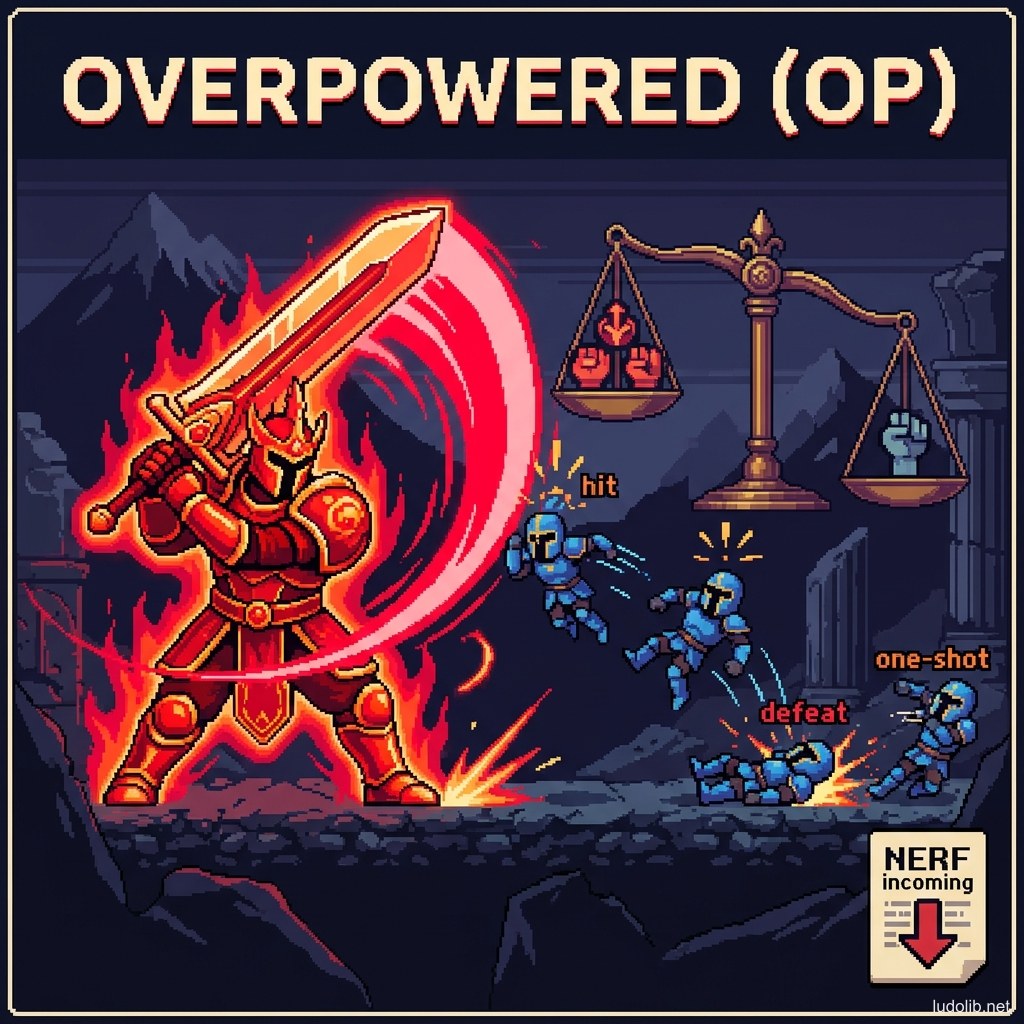 Illustration: An OP character dominating the entire battlefield with a single strike — the power balance is completely broken, leading to a rigid meta and a loss of tactical diversity.
The concept of Overpowered represents an out-of-bounds design segment. It points to a weakness in the system designer’s algorithmic formula network, resulting in the power component (Damage, static defensive capability, mobility) of an entity operating many times stronger than its peer entities.
Systemic Impact
The existence of OP components strongly impacts the two extremes of a game:
- Single-player Experience: A rare OP element is sometimes intentionally retained by developers as a massive reward. For example, a hidden sword at the end of the game. When the player painstakingly unlocks it, it provides the ability to leisurely sweep through every combat room, creating an overwhelming burst of compensatory emotional entertainment.
- Online Multiplayer/eSports Ecosystem: This is a taboo design risk. When an OP champion exists, tactical diversity (Meta) is completely eradicated, because every team composition must choose that entity to maintain their win rate. It erodes the competitive structure and causes a decline in Fairness.
”Nerfing” Control Mechanism
To regulate the OP phenomenon, the data design team continuously processes it through digital update patch notes. A move to reduce power, such as narrowing the damage radius, increasing the Cool-down time, or reducing the magic resistance duration of an Overpowered skill, is called a Nerf. A cyclical OP - Nerf management loop plays a vital role in balancing the Power Loop for Games as a Service (GaaS) titles.