
👹 Boss
Quick Summary
A Boss is a type of machine-controlled antagonist unit (NPC) possessing overwhelmingly superior numerical power, serving as a check station (Checkpoint) summarizing the player’s control proficiency at the end of each level segment or the end of the level’s Narrative.
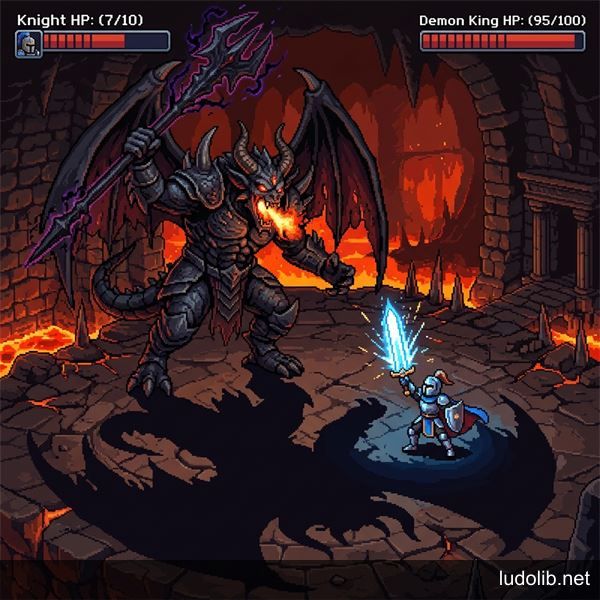 Illustration: The size ratio and the overwhelmingly asymmetrical power dynamic graph between a Boss structure and the player’s avatar.
The term Boss represents specialized combat algorithm blocks containing among the highest health (HP) and damage capacities in the game structure. Boss encounter segments (Boss Fights) are not designed like free-form Survival combat but usually come with an exclusively programmed mechanical metric system to distinguish them from common hostile entities (Minions).
Boss Technical Stratification
Depending on the pacing progression loop checkpoint diagram, designers decompose the antagonist entity levels according to these scales:
- Mini-Boss: Usually acts as a Pacing test appearing in the middle of a level cycle. Possesses higher HP and more complex Attack Patterns than normal creeps but doesn’t require overly strict operational barriers.
- Main Boss: The algorithm block guarding a Narrative transition gate. Demands the controller’s full mechanical focus, possessing multiple physiological phase transition states based on the current health bar accompanied by interactive terrain variation.
- Hidden Boss / Super Boss: A group of entities with disabled default initialization (Optional), requiring a complex indirect condition chain to unlock. This Boss group often breaks standard balance thresholds (sometimes designed to be Overpowered) to serve as rewards catering to a player demographic with a specific high-end skill entry level.
Role in Game Design
Besides acting as a chokepoint for linear Narrative flow, the central role of a Boss Fight is a Cumulatively Testing exam. This combat loop forces the player to proficiently demonstrate the foundational system knowledge blocks (Managing Cool-downs, physical resource management) accumulated throughout the level from the beginning, rather than allowing random reactive responses. Endogenous satisfaction is generated when the player successfully breaks those severely strict patterned attack equation systems.