
⛏️ Grinding
Quick Summary
Grinding describes the player behavior of repeatedly performing a specific action in a game (usually killing monsters or executing a gathering loop) to accumulate Experience (EXP) points, currency, or necessary items to overcome Narrative segments with higher difficulty.
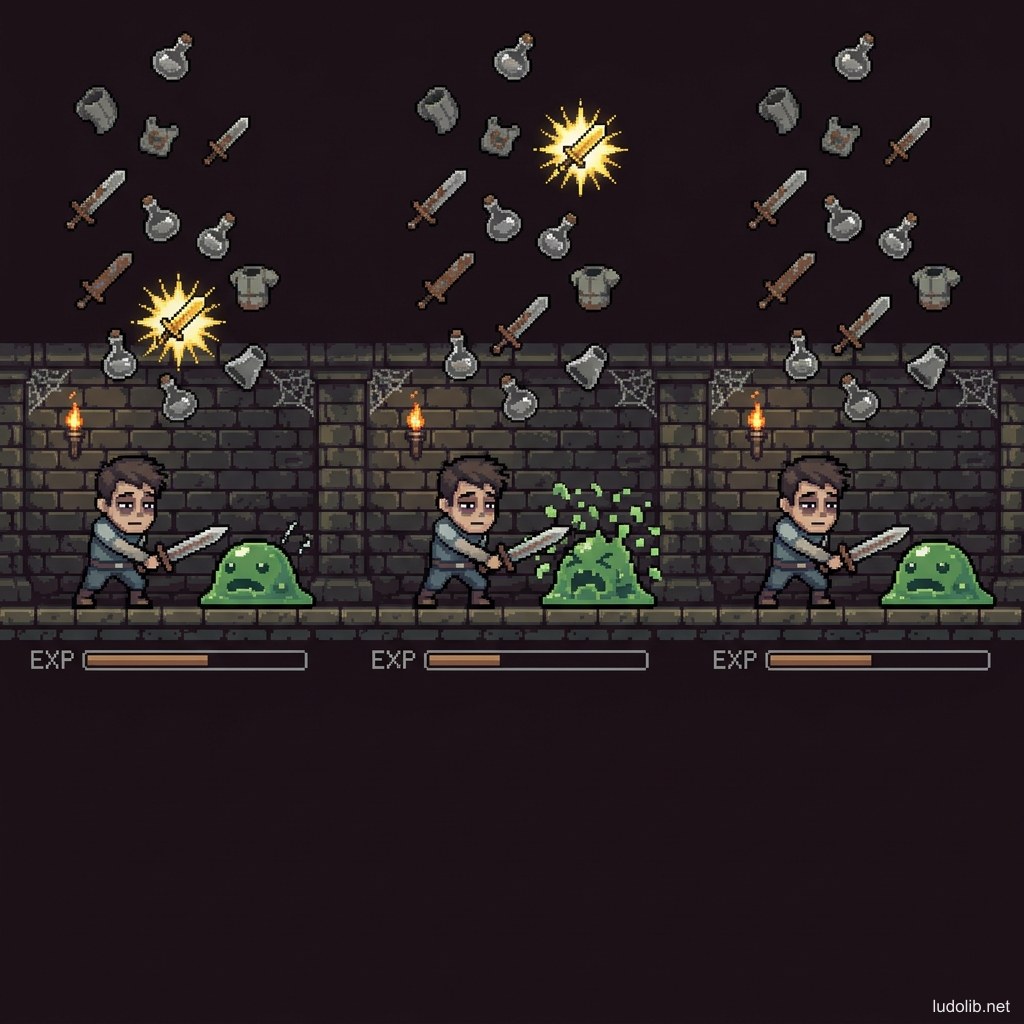 Illustration: The Grinding process — repeatedly interacting with a combat loop to gradually accumulate enhancement resources and experience points.
Grinding (also known as Farming) is a common systemic technical process in Role-Playing Game (RPG) or Massively Multiplayer Online (MMO) genres. It acts as a buffer for the user’s linear progression tempo, forcing them to invest time into repetitive combat mechanics instead of exhausting the game’s short-term content amount too quickly.
Transition and System Characteristics
- Time-gating Element: In the era of early gaming consoles (like Dragon Quest or Final Fantasy), Grinding forced players to execute random combat loops for hours on end to increase stamina (Health Points) to qualify to defeat the next Boss.
- Loot-loop: A well-designed Grinding foundation doesn’t aim to fatigue the player, but establishes alternating random reward milestones (Drop rate) stimulating the Dopamine feedback center in players (like the Diablo or Destiny franchises).
- Negative Boundary: When excessive, this repetitive cycle easily transforms into an annoying coercive barrier (“The Grind”). Some commercial game structures apply this concept to design an impassable barrier, aiming to push players to use real-world finances (Microtransactions) to pay for time-accelerating packages (EXP Boosters).
The difference between a perfectly paced experience level (Pacing Game) and an irrational barrier lies in the system designer’s ability to distribute the Grinding structure progressively.