
Action Role-Playing (ARPG)
Quick Summary
Action Role-Playing Game (ARPG) is a genre combining the fast-paced combat requiring direct reflexes from Action games with the core character stat personalization systems of Role-Playing games. This genre demands players simultaneously possess input mechanic control ability and tactical stat development thinking.
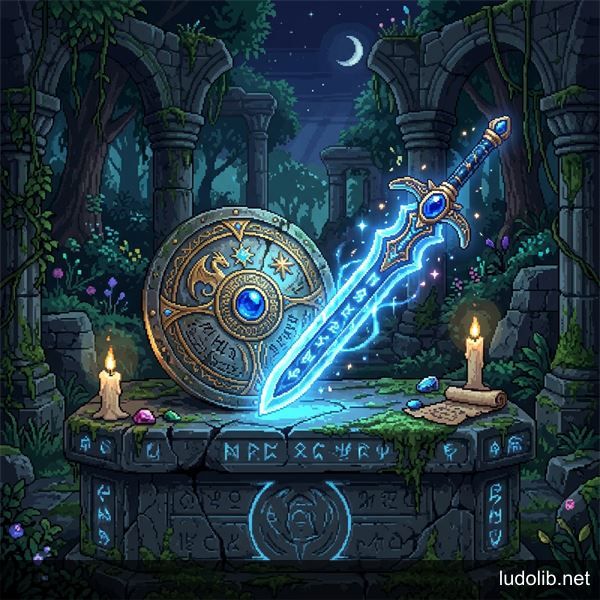 Illustration: The characteristic mechanic of Action Role-Playing — the alternating intersection between real-time combat systems and character stat intervention interfaces.
Action Role-Playing Game (ARPG) is a game structure format combining mechanics from two major genres: the mechanical systems of Action games and the stat progression systems of RPG (Role-Playing) games.
Balancing Mechanical Skill and Stat Systems
In traditional Turn-based RPG structures, the outcome of a combat round is typically automatically determined by the algorithm based on attribute stat differentials. However, in the ARPG ecosystem, combat output is governed in parallel by two fundamental networks:
- Player Skill: The user’s real-time mechanical reflex capability with input devices (timing dodges, executing action skill chains).
- Progression System: The character’s algorithmic power stats (level phase, maximum health points, base physical damage) and the branching Skill Tree structure.
For game design personnel (Game Designer), calculating the balance point between these two system axes is the greatest foundational barrier. If the system favors mechanical skill, the game shifts its blurred boundary toward the Hack & Slash genre. If the algorithm tilts entirely toward stat power, eliminating the player’s reflexes as a deciding factor, the challenge loop breaks down.
Two Representative ARPG Structure Sub-branches
1. Isometric Camera Branch (Isometric ARPG / Diablo-like)
This basic grid Gameplay structure was shaped in popularity by the Blizzard Diablo game series.
- Display environment uses an overhead diagonal view (Isometric camera).
- The Core Loop mechanic depends on eliminating large quantities of the monster ecosystem to collect virtual items and materials with randomized probability (Loot-loop mechanics).
- Prominent market examples: Path of Exile, Grim Dawn, Torchlight.
2. High-Ratio Action Combat Branch (Soulslike)
This design group began splitting into a separate mechanic characteristic stream with the complex environment structure of Dark Souls (2011).
- Combat loop focus operates at a slower pace, requiring strict situational monitoring and analysis. The core mechanic is based on a resource stamina limit interface design (Stamina bar) with a limited number of allowed action executions.
- The system’s punishment rate for risks arising from player action errors is very high, forcing a tight learning curve.
- Prominent market examples: Elden Ring, Bloodborne, Nioh.
Technical Development Characteristics
Initiating and deploying a commercial-scale ARPG project requires enormous technical resource allocation levels. The production team — encompassing both Level Design and Narrative Design — must simultaneously establish a combat physics algorithm network (Combat mechanics) with millisecond response precision, while also maintaining a large-value database of thousands of hypothetical items (Progression mathematics). Precisely because of its deeply comprehensive combination of manipulation, calculation, and narrative, ARPG structures typically record stable long-term user Retention metrics.