
🍄 Mario
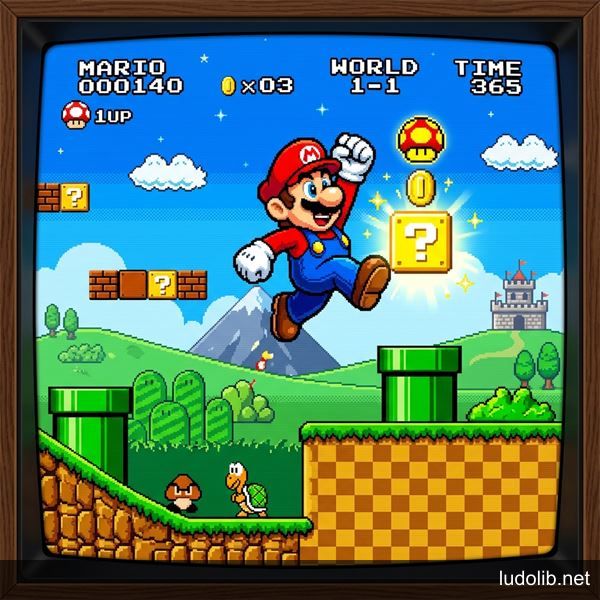 Illustration: The classic icon of the global Game industry — the brave plumber hero in his iconic red overalls.
Mario (or Super Mario) is the fictional character acting as the supreme soul of Nintendo. Since his first appearance under the name “Jumpman” in the Arcade game Donkey Kong (1981), this character has grown to become the greatest representative face of global video game culture.
1. Visual Design & History
Mario’s design was severely constrained by the computing power of old game consoles. Author Shigeru Miyamoto dressed Mario in prominent Overalls (to help players easily identify arm-swinging animations), a cap (to cover the inability to convincingly animate hair with square 8-bit pixels at the time), and a mustache (because in the 8-bit memory era, designing a mouth with pixel dots was very hard for distinguishing facial structure).
2. Mechanical Design Legacy
Mario is not simply a character; the design of the game series surrounding him has permanently established the structural foundation for the entire Platformers & Runners genre:
- Gravity & Jump Physics: Unlike products of the same era, Mario’s jump carries a sense of weight — including momentum when running, and jump height directly modulated by the Controller button hold time.
- Environmental Function: Instead of a wielded weapon to face hordes of Goombas or Bowser, Mario’s jump is the weapon. It erases the dividing line between movement and attack, creating an extremely captivating Flow State loop.
Mario’s rise has always accompanied Nintendo’s explosion, elevating him into a symbol beyond Pop Culture — on par with Disney’s Mickey Mouse. Whether racing cars, playing tennis, or rescuing Princess Peach, this plumber’s range is an eternal chain of connection.