
⚔️ The Legend of Zelda
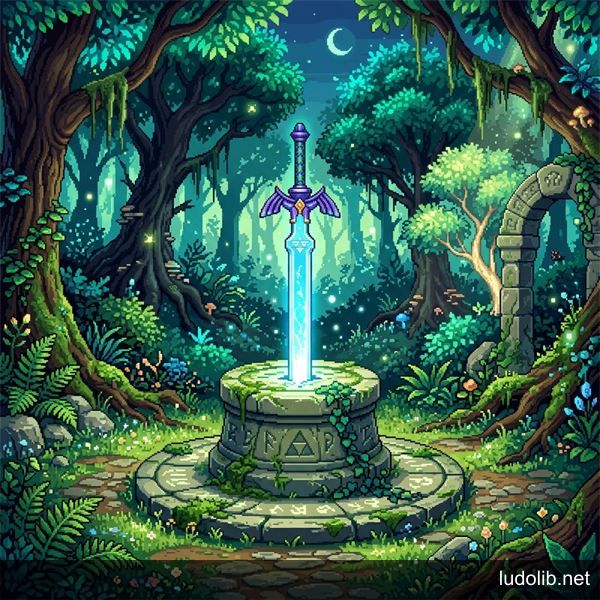
Quick Summary
The Legend of Zelda is an action-adventure game series produced by Nintendo. This franchise contributed important technical design foundations to the game development industry, particularly with its dungeon design philosophy and the foundational concept of Open World exploration.
The Legend of Zelda is a classic exclusive action-adventure game series belonging to the Nintendo ecosystem, first released in 1986 on the Famicom/NES. Under the development of Shigeru Miyamoto and Takashi Tezuka, the franchise has maintained a milestone of over 125 million copies sold as of 2024.
Central Characters
| Character | Role |
|---|---|
| Link | The main character — a Hylian warrior controlled by the player |
| Princess Zelda | The Princess of Hyrule — often the one to be rescued, but also a wise and powerful character |
| Ganon / Ganondorf | The villain — the dark sorcerer, Link’s eternal enemy |
Many people mistake the main character’s name for “Zelda”. In fact, Link is the character the player controls — Zelda is the princess in the game’s title.
Landmark Titles
The Legend of Zelda: Ocarina of Time (1998)
Often voted the greatest game of all time in many polls. This was the first title to bring Zelda to 3D, redefining the entire Action-Adventure genre:
- Lock-on targeting (Z-targeting) — copied by countless subsequent games
- Storytelling through 3D space — not linear cutscenes
- Complex Dungeon design with Item-based Progression
The Legend of Zelda: Breath of the Wild (2017)
The Open World revolution: Nintendo abandoned the traditional linear Dungeon formula, granting players absolute freedom — climb every surface, cook food, exploit physics, go anywhere from the very start of the game. Won Game of the Year 2017 and shaped the entire subsequent generation of Open World games.
The Legend of Zelda: Tears of the Kingdom (2023)
The direct sequel to Breath of the Wild. The Ultrahand mechanic (combining any objects to create machines, vehicles, traps) generated countless unexpected player creations. The fastest-selling game in Nintendo history, selling 10 million copies in the first 3 days.
Influence on Game Design
1. Dungeon Design
Every Zelda dungeon is one large puzzle — the player receives a new item (Hook Shot, Boomerang…) and uses it to solve every challenge within that dungeon. This philosophy has profoundly influenced the Level Design of the entire adventure game genre.
2. Nonverbal Storytelling
Zelda maestros storytelling through world architecture and sound rather than text. Players understand Hyrule’s history through exploration of ruins, not dialogue.
3. Redefining “Open World”
Breath of the Wild proved that Open World doesn’t need a dense task checklist — instead, a world rich in physics and interaction will naturally create its own story for each player.
Relationship with Other Systems
- Zelda is an exclusive Franchise of Nintendo, only appearing on Nintendo platforms.
- The Z-targeting mechanic in Ocarina of Time is a masterclass example of simple yet extremely effective mechanic design.
- Zelda: Ocarina of Time holds the Speedrunning Any% record under 7 minutes through the ACE (Arbitrary Code Execution) technique.