
8-bit / 16-bit Classic
Quick Summary
8-bit & 16-bit (Pixel Art Design) is an image design approach using sharp-edged square pixel blocks at low resolution — drawing direct inspiration from the characteristic hardware graphics limitations of arcade machines from the 1980s–90s.
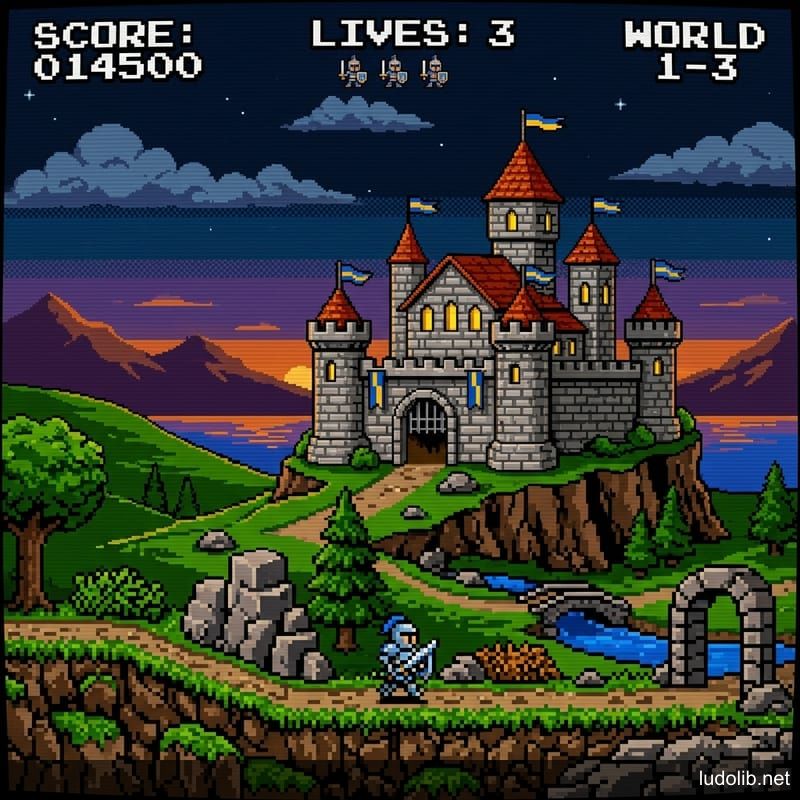 Characteristic 8-bit graphics: A 2D spatial scene composed plainly from square pixel blocks and a limited color palette.
What is 8-bit & 16-bit Classic Art?
Pixel Art was originally not an artistic choice, but a mandatory technical solution to optimize the cramped memory of early gaming machines:
- 8-bit systems: Possessed an extremely limited color palette and very compact character sizes — creating a distinctive aesthetic tightly tied to the NES (Nintendo cartridge) generation.
- 16-bit systems: CPU power upgrades a decade later brought the ability to express far more vibrant colors, more shapes, and detailed background layers (SNES, Sega Genesis generation).
Today, Pixel Art is no longer something done out of lack of rendering technology — it has become a distinct nostalgic aesthetic ideology. By providing very little actual visual information, this format forces the player’s imagination to fill in the missing details. Pixel Art is extremely popular with indie teams like Celeste, Shovel Knight, and Stardew Valley for its timelessness and nostalgic aesthetics. The specialized software for this style is Aseprite — the de facto standard tool of the global pixel artist community.