
Voxel Art
Quick Summary
Voxel Art (Volumetric Pixel Graphics) is a method of building 3D spatial models based on a volumetric grid algorithm. All environmental parameters are programmed and created from millions of discrete small cubes (Voxel — Volumetric Pixel) each possessing their own individual physical coordinates.
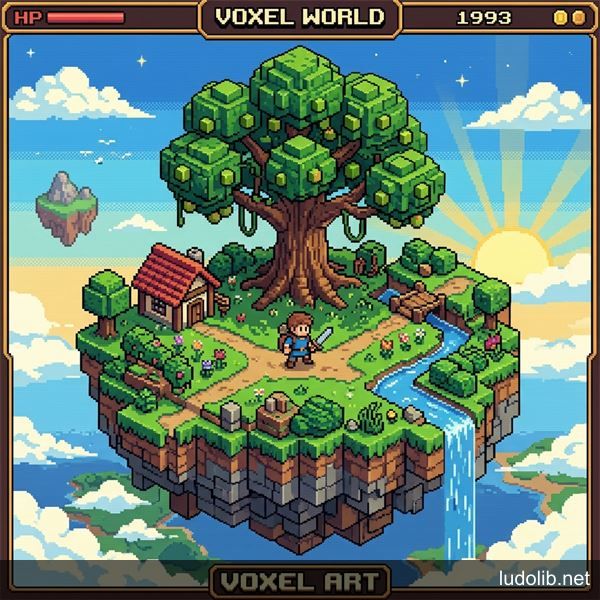 Illustration: A Voxel Art design environment, where the graphics rendering device property turns each cube into a separate numerical data molecule that can be manipulated.
The Nature of Voxel Block Learning
In standard real-time computer graphics design (Polygon 3D), objects are typically “hollow shells” surrounding wireframe structures with applied surface coverage (Texture). However in the Voxel setup algorithm, each coordinate position cell holds a solid core space from the central display portion. This system ensures high interactivity: operators have the right to physically intervene in the environment by hollowing out hill structures or dismantling a wall section by removing the specified block array set.
Impact on the Experience Loop
The mathematical model controlling Voxels once had a memory latency barrier due to having to store extremely large coordinate data for the independent block infrastructure. Thanks to upgrades in hardware technical foundation scale, Voxel technology was refined and applied as the core gameplay loop for survival experiences — defining the market through the game Minecraft. Subdividing the physicality of all material resources on the plane excellently supports construction technology (Base building) and terrain destructibility capability (Destructible environment) comparable to the later project Teardown.