
Polygon
Quick Summary
Polygon (Multi-sided Face) is the smallest surface structural unit that makes up the entire 3D display configuration on computer graphics hardware. It typically has a basic geometric form (primarily Triangle) — interlaced synchronously together to establish the skin area of an overall mesh network (Mesh).
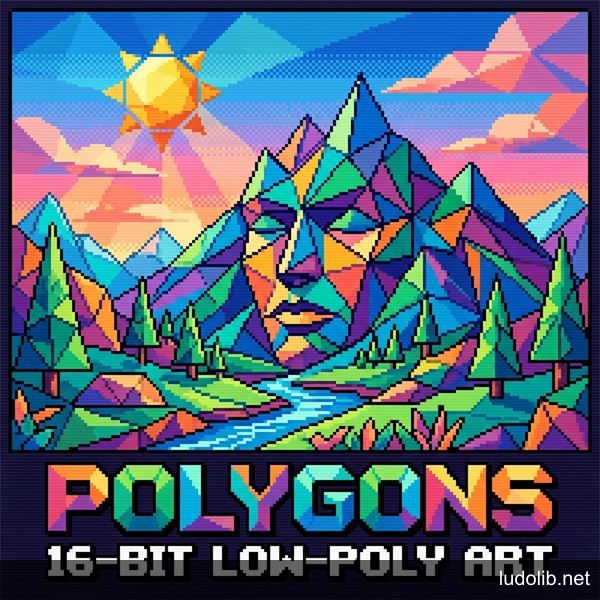 Illustration: The Low-Poly structure of a 3D face — when the surface resolution coefficient is lowered, the interlocking Triangle (Polygon) patches have their geometric hardware properties exposed to the naked eye.
The real-time rendering system of the Console lifecycle — from PlayStation 1 (1994) to modern graphics chips today — processes the scene rendering process through Polygon equations. Every 3 empty coordinate points in space (1 standard triangle system) establishes one Polygon face limiting static light and color. A collection of millions of Polygons will constitute the smooth form of a supercar or knight’s armor.
Computer Hardware Limitations
In game structure, Polygon Count (total surface polygon pixel quantity) establishes the maximum limit measurement of the GPU (graphics card).
- Resource Barrier: A game design frame from 1996 cost on average 300 Polygons to establish the geometry for a female protagonist character (Example: Lara Croft on PS1). Forcing this number past the mark would cause algorithm frame drop (Framedrop) because the processor couldn’t solve the pixel position equation per second (60 FPS).
- Tessellation Display Technology Progress: Today, a Kratos character in full-block graphics can contain +80,000 polygons. Smart partitioning algorithms automatically split a large Polygon into hundreds of ultra-small Triangles when the player moves the camera very close — creating the illusion of hair fiber or continuously flowing stitch lines rather than old-style angled block folds.
Low-Poly Aesthetic Evaluation
The technical divergence in Polygon distribution led to an independent style ideology called Low-poly Art. These game design formats actively limit the extreme polygon count volume to simulate nostalgic ecosystems. By exposing the angular block structure of triangle structures without surface smoothing groups, publishers intentionally harvest away natural realism — re-establishing origami-style aesthetic standards heavily focused on flat shaded color panels (Flat Shaded Colors).