
🎨 Shader
Quick Summary
A Shader is a small GPU program that determines how surfaces, lights, and effects are rendered — defining the visual appearance of everything from character skin to water reflections to atmospheric fog.
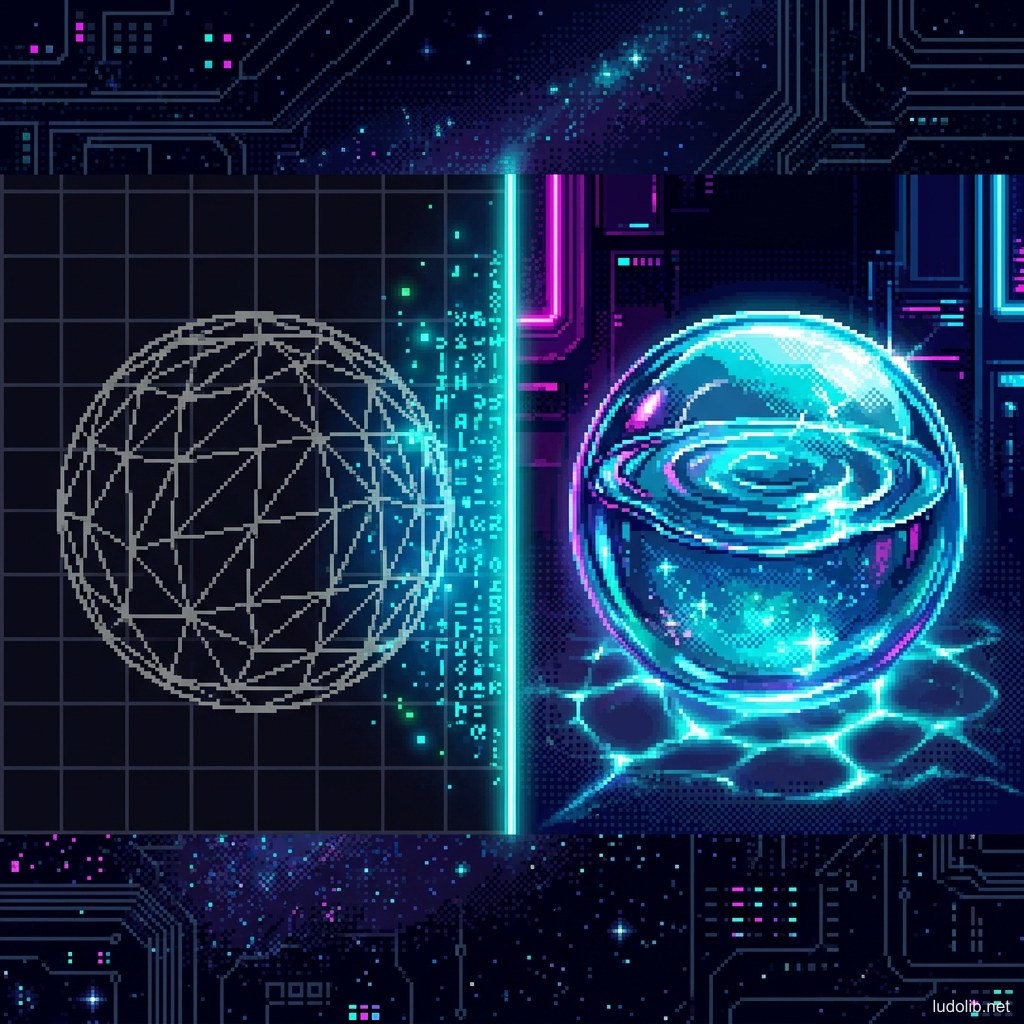
What Shaders Do
Shaders run directly on the GPU (not the CPU) and execute in parallel for every pixel or vertex being rendered. There are two primary types:
| Shader Type | Purpose |
|---|---|
| Vertex Shader | Transforms 3D geometry positions into 2D screen coordinates |
| Fragment/Pixel Shader | Determines the final color of each pixel, applying textures, lighting, effects |
Common Shader Languages
- HLSL (High-Level Shader Language): DirectX/Windows ecosystem; used in Unreal Engine
- GLSL (OpenGL Shader Language): Cross-platform OpenGL
- Metal Shading Language: Apple platforms
- ShaderGraph / Shader Forge: Visual node-based shader editors (no code required)
Shader Effects in Practice
- Toon/Cel shading: Borderlands, Genshin Impact — achieving stylized cartoon look
- Water shader: Animated normal maps + Fresnel equations for realistic water
- Grass wave shader: Wind effect on foliage via vertex shader
- Post-process shaders: Bloom, vignette, color grading, depth of field
PBR (Physically-Based Rendering)
Modern game shaders typically implement PBR — a standardized approach where materials are defined by real-world physical properties (metallicity, roughness, base color) that respond correctly to any lighting setup.