
🌸 Anime (Anime & Manga Theme)
Quick Summary
Anime is a theme oriented towards art design language and narrative structure carrying the characteristic style of Japanese animation (Anime) or comics (Manga), rather than specifying a particular gameplay mechanic.
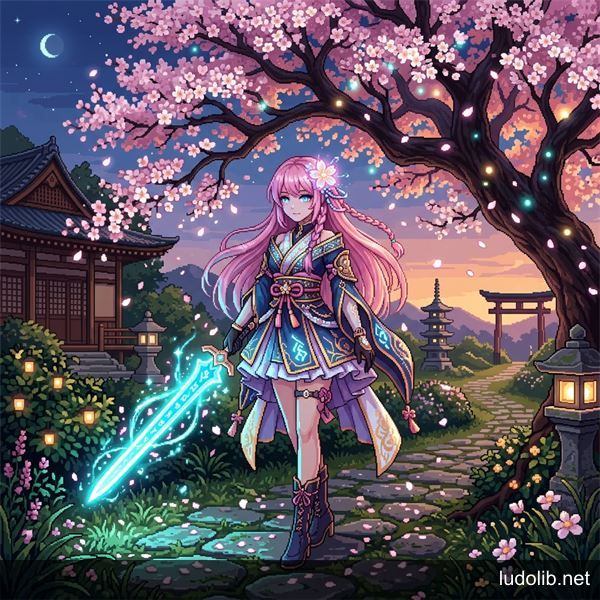
Anime is not a Gameplay Genre. The Anime tag on platforms (like Steam) serves to group games whose art direction and cultural nuances are directly influenced by the Japanese animation/comic industry. This is a guiding signal aimed directly at users who love this specific culture, regardless of the game’s core mechanics.
Cel-Shading
The most powerful technological foundation for Anime franchises is the 3D rendering technique called Cel-Shading. Instead of trying to simulate realistic physical shadows (Photorealism) with soft gradients of light and dark, Cel-Shading uses flat color patches and hard contours surrounding objects. This blocky structure tricks the eye, creating interactive 3D frames that feel like classic 2D drawings on paper or hand-drawn animation.
Relationship with Other Genres
The Anime theme typically appears under the 3 most popular genre protocols:
- Visual Novels: Visual novels naturally have a graphical structure that is mostly 2D Manga drawings with a ratio heavily leaning towards Japanese culture.
- Fighting: Adapted franchise fighting games (e.g., Naruto Storm, Dragon Ball FighterZ) recreate attack animations with the standard cinematic intensity of an Anime film (known as Sakuga technique).
- JRPG and RPG Gacha Ecosystems: (e.g., Genshin Impact, Honkai: Star Rail). These highly profitable projects invest heavily in character design (Waifu/Husbando). The display quality of this group is closely tied to virtual character card sales, requiring strong coordination from senior design teams (belonging to the 2.5D Focal Point Art group).