
♟️ Turn-Based Strategy (TBS)
Quick Summary
Turn-Based Strategy (TBS) takes inspiration from traditional board games, where two (or more) factions alternately deploy strategic actions on a static map framework. All military manipulation decisions and resource management occur within that faction’s “turn” without real-time pressure.
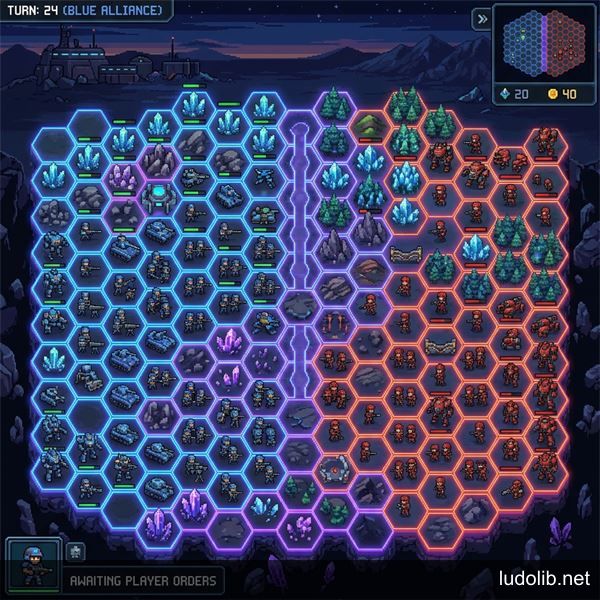
Turn-Based Strategy (abbreviated TBS) recreates the micro-tactical thinking structure of Chess or Chinese Chess. On a geographically divided map interface (typically drawn to Square Grid or Hexagon groove standards), everything from troop movement and resource mine exploitation to skill activation is allocated sequentially per Turn.
Time Limit Elimination Characteristic
In contrast to the continuous APM (Actions Per Minute) pressure of Real-Time Strategy representatives, TBS provides an unlimited time environment. Users have full authority to pause the game to calculate multi-step economic/military scenarios while the static simulation network always maintains a waiting state.
Three Mechanic Backbones
- Immutable Resource Management: Soldier units in TBS demand a complex, high-cost summoning process. Losing a military unit is a loss of both visibility advantage and spatial control — with no immediate compensation mechanism from the random drop activities of Action Role-Playing branches.
- Fog of War: A regulation limiting map blind spots. Unexplored areas display as blacked-out zones. This rule forces participants to spend turns on long-range scouting patrol functions to prevent ambush vectors.
- Mathematical Probability Distribution: Rather than guaranteeing results based on strike force, the combat score algorithm typically combines probability (% Hit/Dodge) through the real terrain count system (Units firing from a hilltop will have higher penetration rates, while firing through forest clusters will have 50% reduced hit chance).
Branch-Building Legends
- Sid Meier’s Civilization: The great composite simulation of humanity’s evolution timeline. Complex enough to spawn its own distinct genre designation for extraordinary micro-thinking level: Grand Strategy & 4X.
- XCOM series: The icon of squad tactics against aliens. Famous for its % hit probability distribution algorithm creating an extremely tense risk feeling.
- Advance Wars / Wargroove: Design systems for compact battles on small cross-sections best suited to Nintendo mobile device configurations.
Connections
The graphics setup on TBS design foundations typically relies on a static terrain-tiered grid structure by the Level Design group. The enemy command Artificial Intelligence (AI) system demands an extremely detailed multi-command algorithm stream to exhibit a logical response cycle equal to the analytical thinking of a living entity.