
⚖️ Meta vs Progression
Quick Summary
Meta (Metagame) and Progression are two primary drivers that keep players engaged with a game. While Progression focuses on direct advancement through game mechanics (leveling up, gaining stats), the Meta revolves around emotional, aesthetic, and social elements (skins, narrative, collections) that don’t directly affect core gameplay power. Understanding this distinction helps Game Designers balance challenge and revenue optimization. [S1]
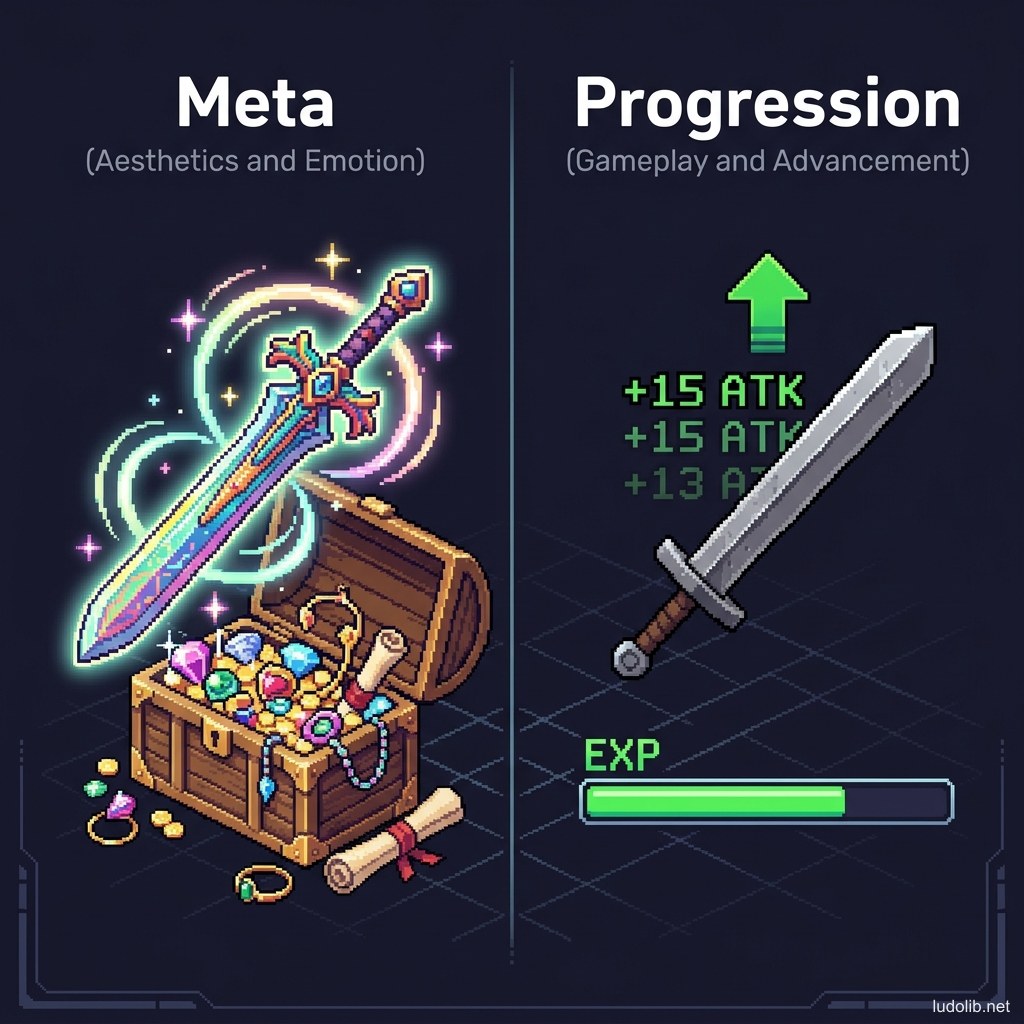 Illustration: The contrast between the aesthetic and emotional appeal of the Meta (left) and the logical, stat-driven nature of Progression (right).
1. Definition and Goals
| Criteria | 🎭 Meta | 📈 Progression |
|---|---|---|
| Definition | Player motivation not linked to any gameplay advantages. Focuses on emotional and aesthetic elements. | Direct advancement through game mechanics. Involves gaining something that affects gameplay. |
| Core Goals | - Increase long-term retention - Provide valuable emotional goals - Introduce additional monetization points | - Satisfy the need for mastery and advancement - Engage players with increasing challenges and rewards |
2. Psychological Impact and Target Audience
The biggest difference lies in the psychological needs each system addresses:
Meta: Fulfilling the Ego
- Appeals to the desire for uniqueness and self-expression.
- Encourages social interaction and community building.
- Target Audience: Players valuing aesthetics and social aspects, Casual gamers, Collectors, and completionists. Read more: Bartle Player Types.
Progression: Fulfilling Mastery
- Satisfies the need for mastery and progression.
- Engages players through the challenge-reward loop.
- Target Audience: Players seeking challenges and skill development, Core gamers, Achievement-oriented players.
3. Practical Application (When to Use & Examples)
When to use Meta?
Use the Meta when you want to:
- Appeal to personalization and social desires.
- Encourage long-term player engagement beyond the Core Gameplay Loop.
- Examples: Cosmetic items, Decor and collections, Narrative and story, Social features like leaderboards.
When to use Progression?
Use Progression when you want to:
- Introduce variety through systems like new upgrades and abilities to keep gameplay fresh.
- Create a sense of accomplishment and growth, such as leveling up.
- Examples: Leveling up, Unlocking new characters, Upgrading skills, Obtaining boosters.
4. Monetization Boundaries and Risks
In Game Monetization, Meta and Progression represent two different earning philosophies, each carrying distinct risks:
| Aspect | Meta | Progression |
|---|---|---|
| Monetization Potential | High potential through cosmetic purchases. Considered a “soft” monetization strategy. | Monetization can lead to Pay-to-Win perceptions. Requires extremely careful balance. |
| Implementation Challenges | - Requires continuous creative asset development. - Balancing cultural preferences. - May not appeal to all players. - Overuse can lead to visual clutter. | - Balancing progression speed. - Ensuring fairness. - Risk of grindiness. - Potential barriers for new players. |
5. See Also
- Core Gameplay Loop — The loop where Progression exerts the most power
- Monetization Strategies — Earning through Meta vs Progression
- Bartle Player Types — The connection between Meta/Progression and player demographics
- Game Balancing — Balancing Progression to avoid Pay-to-Win
- Retention — Long-term engagement through the Metagame
References
- [S1] Anton Slashcev, “Meta vs Progression” — Executive Producer Infographic (2024)