
👻 Horror
Quick Summary
Horror is a video game theme designed with the core purpose of evoking feelings of fear, tension, and unease in players through visuals, audio, and terrifying situations.
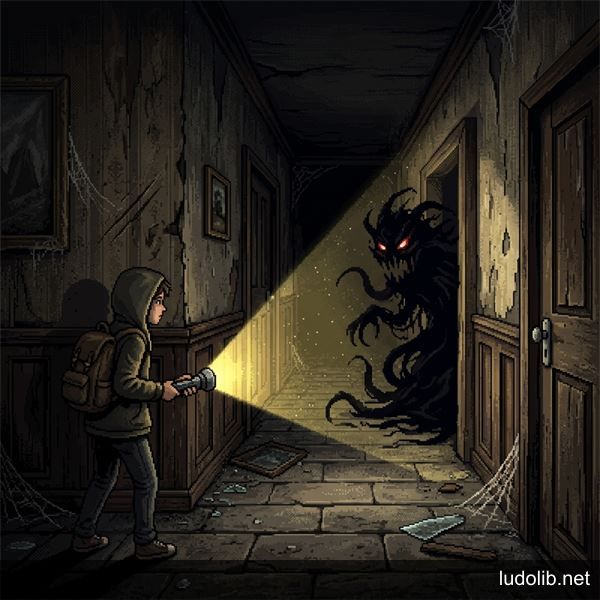
As an Experience Theme, Horror is not bound to a fixed spatial setup like first-person (FPS) or third-person (TPS). The sole objective of every Game Designer in this branch is to build a high level of psychological pressure to push the interactor’s biological stress state to its limits.
Psychological Horror Subgroup
The structure of threat elements typically develops along two fear-inducing equations:
- Jump Scares: Uses sudden changes in frames (usually an entity charging straight at the camera screen) accompanied by maximum-intensity audio to stimulate human natural avoidance reflexes.
- Psychological Horror: Unlike physical attacks, this branch builds invisible fear through environmental emptiness. The pressure stems from the state of “expecting an unsettling event, but it hasn’t happened yet.” Typical examples are silent corridor segments where environmental sounds (creaking wood, door hinges) are amplified. Outstanding representatives of this level are the Silent Hill or Amnesia series. The feeling of insecurity is constant and maintains a persistent mental erosion.
Typical Design Variations
- Survival Horror: Popularized broadly through the iconic Resident Evil (1996). This sub-branch strips away the player’s overwhelming self-defense capabilities by strictly limiting ammunition, medical kits, and inventory space. The Survival experience lies in mathematically calculating risks to decide whether to bypass or engage targets rather than clearing the map.
- Asymmetrical Horror: Large-scale uneven competitive Pacing (Example: Dead by Daylight). Sets up a level structure where 1 entity (a player acting as a killer with superpowers) faces a group of 4 players (Survivors capable only of running and using tricks to hide).
Exploitation Relationships
To create an effective horror atmosphere, environmental architecture in Level Design plays a vital role. The arrangement of light sources and shadowed areas (Lighting & Shadowing) directly impacts psychology. Furthermore, the entire visual aspect only becomes terrifying when supported by strong micro-design from the Sound Design team - where every heartbeat and distinct scraping metal sound can collapse the player’s rationality even if they don’t see the image.