
🔷 Geometry Dash
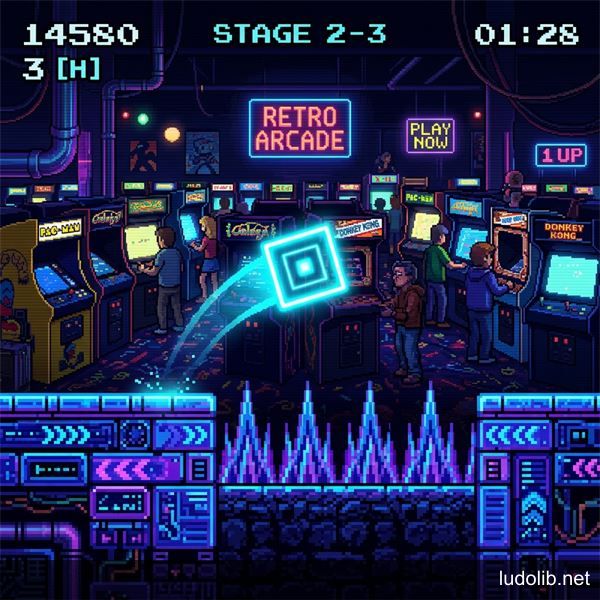
| Developer | RobTop Games (Robert Topala) |
| Release Year | 2013 |
| Genre | Arcade & Rhythm × Platformers & Runners |
| Platform | iOS, Android, Windows, macOS |
| Business Model | One-time purchase (~$4) — no microtransactions |
1. What is Geometry Dash?
Geometry Dash (GD) is a Rhythm-Platformer — a unique hybrid between a platformer game and an rhythm game. The player controls a geometric shape (square, ship, rocket, etc.) that automatically moves forward and has only ONE single action: press/hold the screen or Space key to jump/fly.
But that simple action must be executed in rhythm and at the exact right moment — otherwise, you hit a spike and return to the beginning of the level (no checkpoints).
2. Core Mechanics: Simplicity Taken to Brutality
One Button, Infinite Consequences
GD’s Mechanic is a perfect example of minimalist design: just one action (press), but the timing and duration of holding the button create vastly different outcomes depending on the type of character being controlled:
- Square: Each press = one jump.
- Ship: Hold = fly up, release = fall down.
- Ball: Press = reverse gravity.
- UFO: Hold = float up in gentle steps.
The variety of “character types” creates completely new Dynamics even though the base mechanic doesn’t change — this is RobTop’s genius design.
No Checkpoint — “Platformer of Death”
Every level is a continuous sequence from 60 to 180+ seconds. No mid-level checkpoints. If you die at 97%, you return to 0%. This mechanic creates an extreme form of Aesthetics: accumulated tension — the feeling of every second passing while at a high percentage gets more and more nerve-wracking.
Rhythm + Muscle Memory
You can’t pass a level by reflex alone — players must memorize the entire sequence of actions through hundreds of attempts. This places GD closer to classic Arcade design than modern platformers.
3. The Level Creator Community: A Creative Ecosystem
Powerful Level Editor
GD comes with a full Level Editor — allowing players to design and upload their own levels to the server. This is one of the most accessible yet also deepest Level Editors in indie game history.
The “Demon Levels” Culture
The GD community classifies difficulty as Easy → Hard → Insane → Demon → Extreme Demon. Community-created “Extreme Demon” levels require tens of thousands of attempts and months of practice — some famous levels like Bloodbath or Tartarus have only a few hundred people in the world who have completed them.
Speedrunning and Streaming
GD is one of the most-watched games on YouTube and Twitch when streamers take on the challenge of completing Extreme Demons — creating extremely popular “real-time reaction” content.
4. One Person Built the Whole Game
The entirety of Geometry Dash was programmed, designed, and operated by a single person — Robert Topala. No studio, no team. Estimated revenue exceeds $30 million USD from the one-time purchase model.
This is an extremely powerful case study of the power of modern game engines (GD uses Cocos2d) and the digital distribution model lowering barriers for solo developers.
See also: Taiko no Tatsujin, Osu!, Guitar Hero, Beat Saber, Arcade & Rhythm, Platformers & Runners