
💡 Lighting Design in Games
TL;DR: Lighting Design is the process of controlling light in the game environment — not just so players can see the scenery, but to direct attention, establish emotion, and tell stories. Light is the most powerful tool in Game Art without adding any extra assets.
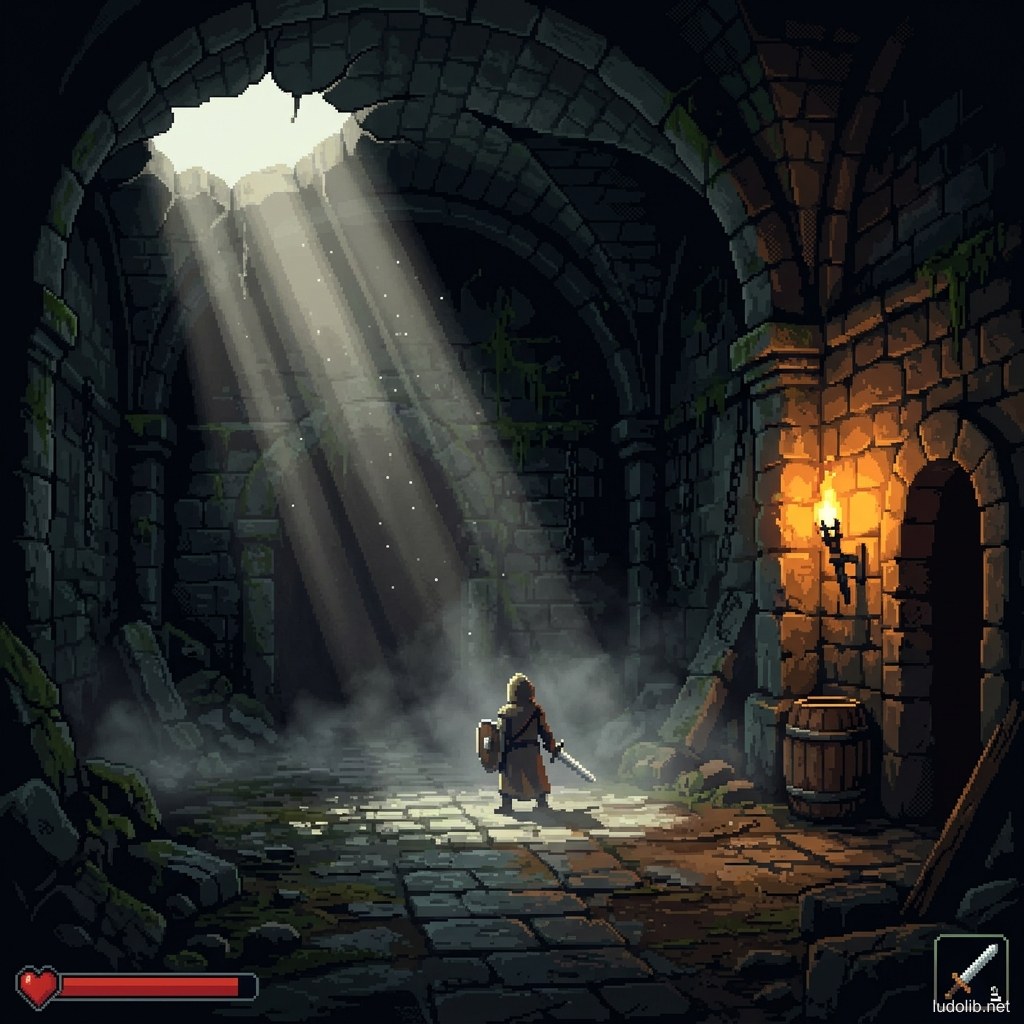
The same room with the same set of objects — but warm yellow light from a fireplace creates a completely different peaceful feeling than cold blue light from a stormy window. This is why Lighting Design stands as its own specialty in the AAA game production pipeline, with dedicated roles like Lighting Artist and VFX Artist handling lighting separately.
Core Concepts
| Light Type | Description | Role in Games |
|---|---|---|
| Directional Light | Infinite light source simulating sun/moon | Main lighting for outdoor scenes, casting global shadows |
| Point Light | Light source emitting in all directions from 1 point (like a candle) | Fireplace, lantern, glowing spell |
| Spot Light | Cone-shaped light in a specific direction | Flashlight, stage spotlight, character flashlight |
| Area Light | Light emitting from a surface | TV screen, daytime window, neon sign |
| Ambient Light | Directionless background light, filling overall shadows | Prevents shadows from being completely black, creates spatial sense |
Operating Principles
Three Main Lighting Techniques
1. Baked Lighting (Pre-computed lighting) Light is calculated in advance and “baked” into textures (lightmap). Cannot change at runtime, but extremely light on GPU. Suitable for static environments: buildings, caves, interiors [S1].
2. Real-time Lighting (Per-frame calculation) Light calculated every frame — allowing light sources to move (flickering candle, swaying lamp in the wind). High GPU cost, directly affecting Frame Rate. Number of real-time lights must be balanced.
3. Ray Tracing Technique calculating the actual path of light rays — reflections, refractions, and extremely accurate shadows. Currently only feasible on RTX GPU hardware and above [S2]. See also Photorealism.
Light as Player Guide
Lighting is an invisible wayfinding tool. The “Light Leading” technique places light sources along the correct path, with darkness covering dead ends [S3]. Players naturally walk toward light without needing directional arrows.
Game Examples
- Returnal (Housemarque, 2021) — Uses full real-time ray tracing on PS5. Every bullet fired creates a dynamic light point reflecting off the floor — creating an impressive visual effect in combat.
- Inside (Playdead, 2016) — 2D side-scroller game but lighting designed like film noir: the character is often only lit by faint yellow light from behind, creating a mysterious silhouette and constant sense of being hunted.
- Alan Wake (Remedy Entertainment) — Light is a direct gameplay mechanic — not just decoration but the only weapon effective against enemies.
Trade-offs
| Aspect | Content |
|---|---|
| ✅ Advantages | Good lighting can significantly upgrade the visual quality of average assets. A simple environment with good lighting looks more impressive than a complex environment with poor lighting. |
| ❌ Disadvantages | Real-time lighting consumes significant GPU budget. Baked lighting is rigid — not suitable for games with dynamic day-night cycles. |
| ⚠️ Common Pitfall | ”Too dark” — many indie games design darkness for atmosphere but to the point where players genuinely cannot see enemies/platforms. Always test on average screens, not just developer’s high-quality monitors. |