
🧲 Addictive Game Design
Quick Summary
Addictive Game Design is the application of behavioral psychology and systems design to maintain long-term player engagement. Rather than blind manipulation, it is about understanding intrinsic player motivations and building systems that sustainably satisfy those needs.
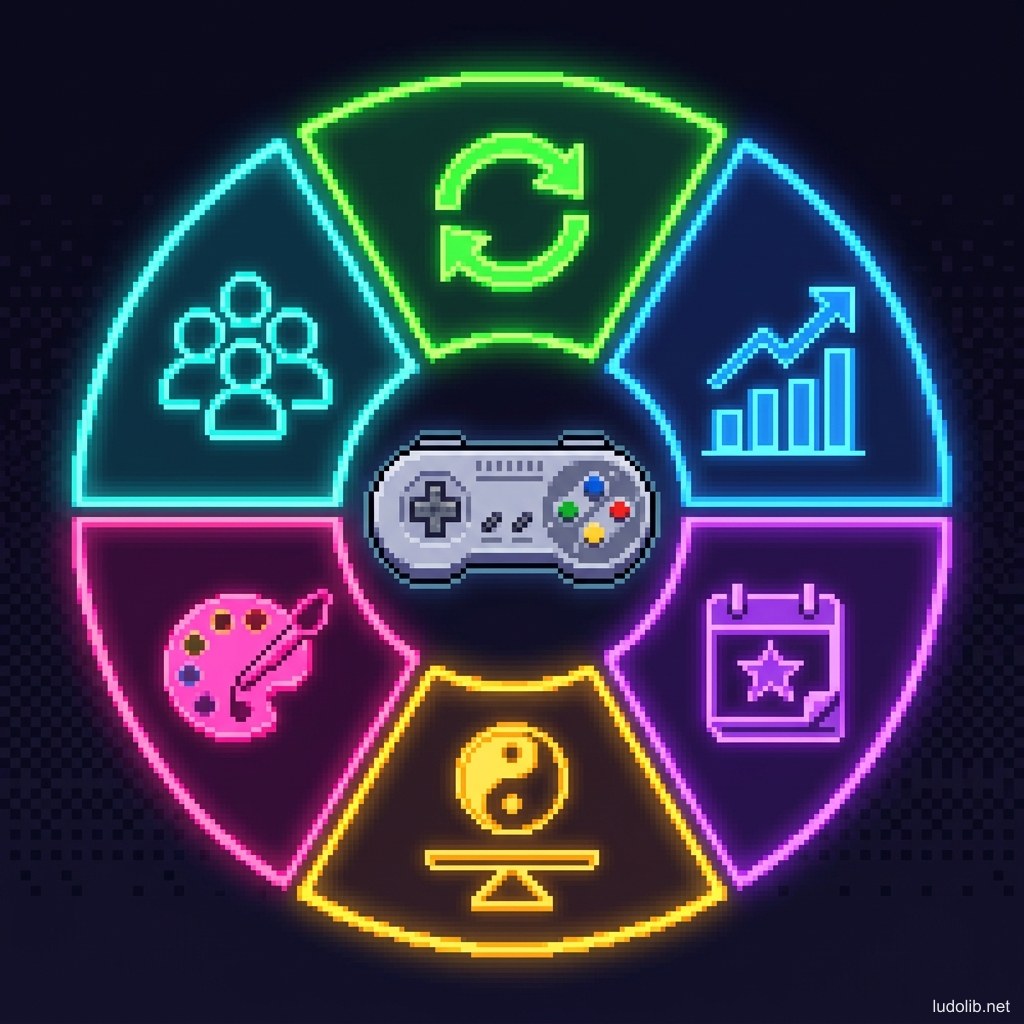
A commercially successful game isn’t just fun for the first hour — it must keep players returning after a week, a month, and a year.
The Pillars of Engagement
1. The Core Loop
The fundamental repetitive action sequence of the game (e.g., Kill Monster → Get Loot → Upgrade Gear → Kill Stronger Monster). A tight, instantly rewarding core loop is the foundation of engagement.
2. Variable Reward Schedules
Derived from B.F. Skinner’s operant conditioning research: players are more engaged when rewards are unpredictable (e.g., loot drops, critical hits, Gacha pulls) rather than guaranteed.
3. Clear Short, Medium, and Long-Term Goals
- Short-term: Complete this match (5 minutes)
- Medium-term: Unlock the next weapon tier (3 days)
- Long-term: Reach Diamond rank in competitive play (3 months) Players must always have an active goal pulling them forward.
4. Loss Aversion
Mechanics that penalize not playing, such as daily login streaks, decaying ranks, or limited-time events (FOMO). While effective, overuse causes player burnout.
5. Social Investment
Guilds, leaderboards, and co-op dependencies. When players form social bonds or rivalries, they return for the community as much as for the mechanics.