
🕸️ Metroidvania
Quick Summary
Metroidvania is a map design system for action-exploration games. Its hallmark is a massive, seamlessly connected maze where locked areas can only be opened when players collect the appropriate upgrade abilities during exploration.
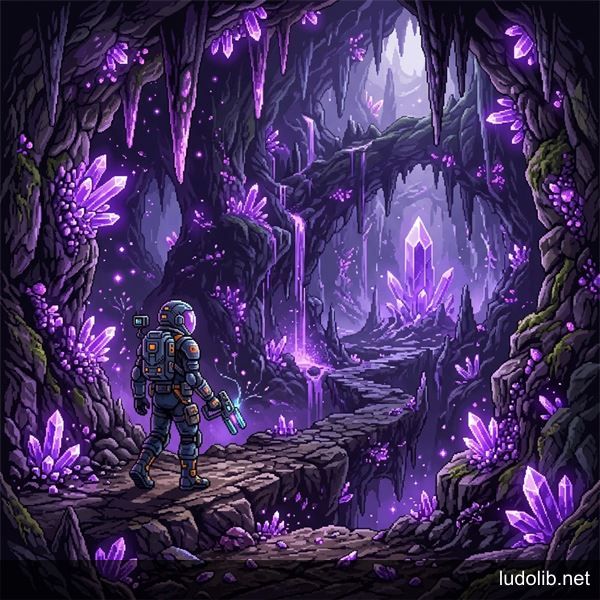
Metroidvania is a defining name for a map design language combining two classics of 2D Action-Adventure: Super Metroid (1994) and Castlevania: Symphony of the Night (1997).
The “Ability-Gating” Structure
The most addictive quality of Metroidvania lies in its unique Level Design macro-map layout super-structure:
- The game does not divide level configurations into independent, disconnected segments. The entire environment is a macro network (typically a fortress or underground maze) 100% interconnected by passable corridors.
- Navigation bottleneck mechanic: The system creates barrier points that prevent free early movement (e.g., a cliff too high to climb). Players must redirect their exploration to other areas. After defeating certain preset challenges, the character absorbs the “double jump” power. Players immediately recognize the navigation rule and backtrack to the previous barrier location to unlock passage. This movement backtracking process is called Backtracking.
The central loop rule: Get Lost Exploring → Hit a Barrier → Redirect to More Dangerous Area → Unlock New Power/Ability → Backtrack to Old Barrier.
Modern Developmental Representatives
- Hollow Knight (2017): A product from a small-scale indie design team, creating the deep, silent insect kingdom network structure. This icon directly and powerfully revived the Metroidvania design group in the modern market and set an extremely high quality standard for the visual art category.
- Ori and the Blind Forest: Focuses on maximally upgrading acrobatic evasion within a Platformer structure, combined with impressively original graphic visual design and outstanding musical quality.
- Bloodborne / Dark Souls: Although featuring a 3D structure, the map architecture establishing multiple interconnected loop points leading back to protection checkpoints is profoundly influenced by the foundational Metroidvania structure originating from Nintendo.