
🎹 Game Music (Background Music)
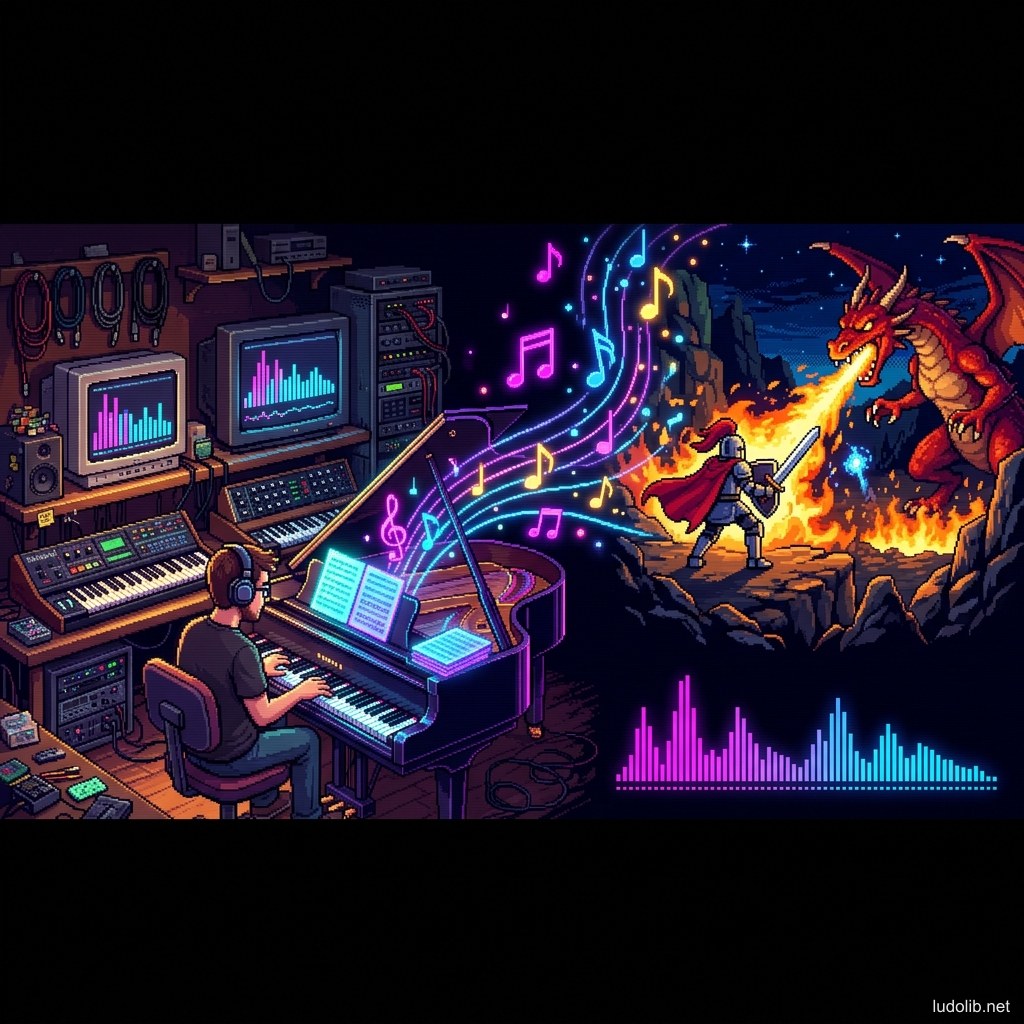 Illustration: A composer at work in a studio, where musical notes connect directly to the dramatic events unfolding on the game screen.
Game Music (Game Background Music / BGM) consists of melodic audio tracks designed to shape the atmosphere, emotion, and pacing of a game. Unlike film or traditional music, game music requires high adaptability to the unpredictable interactions of the player.
1. Music Structure Classification
Linear / Static Music
Music with a clear beginning-middle-end structure, looping in a specific area (Zone) or game menu. This is the classic method from the 8-bit era.
- Examples: The peaceful countryside background music of Stardew Valley or the 1-1 Theme of Super Mario.
Dynamic / Adaptive Music
An intelligent music system capable of branching or changing intensity based on the player’s actual actions.
- Horizontal Re-sequencing: Smoothly switching between two different pieces of music when the player transitions from “Exploration” to “Combat” mode without breaking rhythm.
- Vertical Layering: Adding instrument layers to the current music as the tempo increases. Example: when a Boss is at 20% health, rapid percussion or a choir suddenly harmonizes into the playing background music.
2. The Role of Game Music
Music is not just “background listening.” It serves core design goals:
- Psychological Shaping: High-tempo intense music activates the player’s heart rate, pushing them into a Flow state when facing difficult challenges.
- Mechanic Cue: Eerie violin sounds rise before an invisible enemy appears — an early warning mechanic replacing UI notification.
- Identity Branding: Leitmotifs (short recurring musical phrases) directly identify a character or brand (like the brass notes of Halo).