
📦 DLC (Downloadable Content)
Quick Summary
DLC is the term for digitally distributed additional data packages released after a game’s base launch. These packages are distributed via the internet to expand the game’s ecosystem, add items, or extend the storyline without requiring the player to repurchase the entire product.
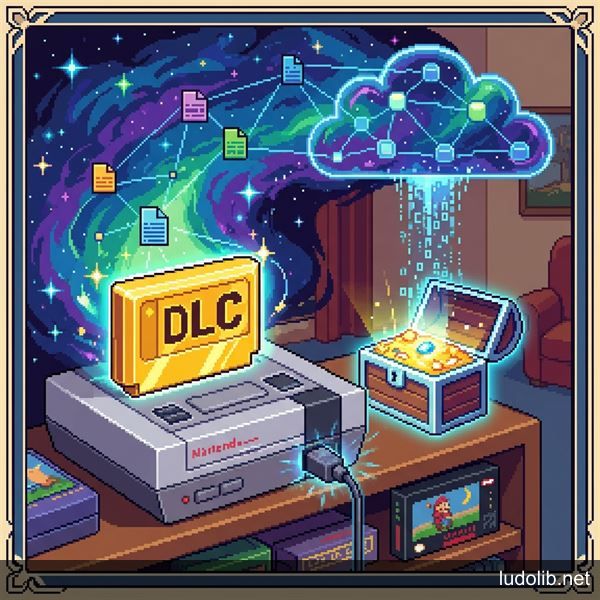 Illustration: The DLC connection mechanism, where asset packages downloaded from the server are decompressed and integrated into the application’s core.
Before the era of digital distribution, expanding game content required publishers to print and sell physical products (Expansion Packs). With the rise of broadband networking, DLC became the most optimal product segmentation strategy, allowing developers to continuously update the lifecycle of a franchise project.
Types of DLC
-
Microtransactions / Cosmetic DLC: Small-file packages that do not interfere with player stats or strength (Game Mechanics). Instead, they provide visual (Skin) or audio (Soundtrack) changes. Prices are typically set very low to encourage micro-purchase decisions.
-
Expansion Pack: Large-file data packages (typically measured in GB) that are transformative to the base game. They add new quest chains, expand the game world, or restructure character progression systems. Example: the Phantom Liberty expansion for Cyberpunk 2077.
Product Lifecycle Strategy
Regular DLC releases are the primary method publishers use to combat the declining engagement rate (Retention) in the single-player game segment.
However, this strategy also carries public relations risks. The consumer community often reacts negatively if they discover that developers deliberately “cut out” original content to sell separately on launch day (Day-1 DLC) to maximize profit instead of providing a complete product.