
📱 Mobile App Stores
Quick Summary
Mobile App Stores — primarily Apple’s App Store and Google’s Play Store — are the dominant gatekeepers of mobile game distribution. Together they control access to the ~3.5 billion smartphone users worldwide and take a 30% revenue share from all in-app purchases.
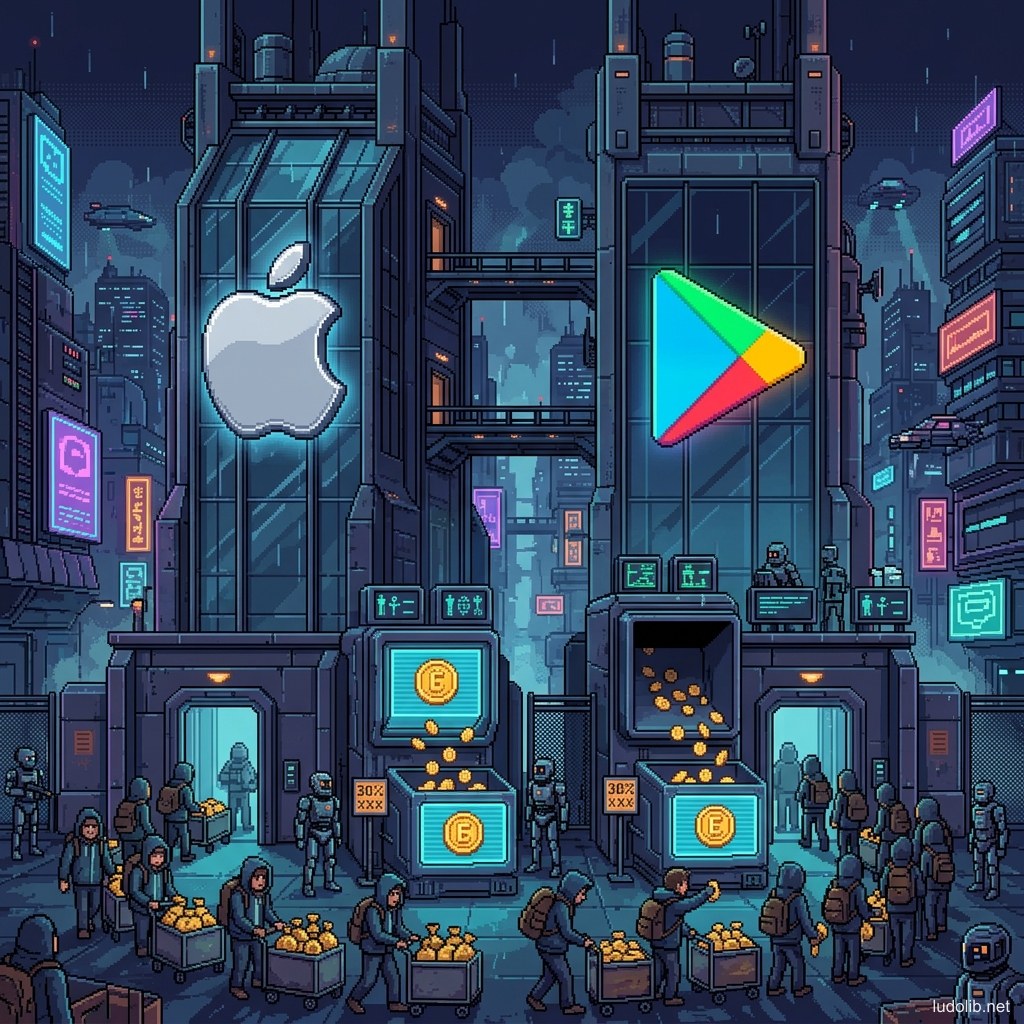
The Two Gatekeepers
| Platform | Owner | Market Share | Revenue Share |
|---|---|---|---|
| App Store (iOS) | Apple | ~65% of mobile gaming revenue | 30% (15% for <$1M/year) |
| Google Play (Android) | ~35% of mobile gaming revenue | 30% (15% for <$1M/year) |
iOS generates disproportionately more revenue despite Android’s larger device install base — iOS users spend significantly more on apps.
Why They Matter for Game Design
The App Store rules directly shape what games can contain:
- Gacha disclosure requirements: Apple requires disclosure of randomized reward odds
- Age rating system: Games with adult content require adult ratings
- Content policies: Certain mechanics face removal or revenue sharing restrictions
- iOS 14 ATT (App Tracking Transparency, 2021): Required explicit permission for ad tracking, devastating mobile ad targeting precision and sharply raising CPI industry-wide
The 30% Controversy
Both Apple and Google’s 30% cut has been challenged in courts and legislatures globally:
- Epic vs. Apple: Most high-profile case; Epic attempted direct payment bypass
- South Korea: First country to legally require app stores to allow third-party payment options
- European Union (DMA): Required Apple to allow alternative app distribution on iOS in the EU