
2.5D Stylized
Quick Summary
2.5D (Pseudo-3D) is a term describing visual design at the intersection of 2D and 3D structures. The concept covers two main techniques: using entirely flat 2D graphics but simulating spatial depth (like the Isometric cut-layer perspective), or using actual 3D models but locking the camera angle on a linear 2D movement plane (Sidescroller).
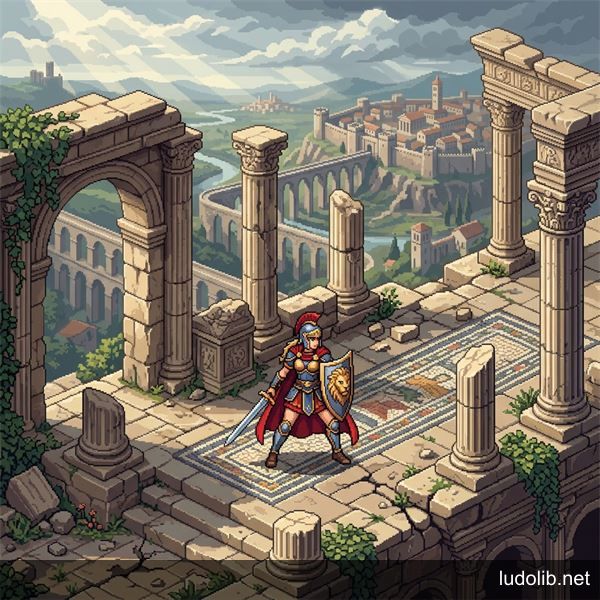 Illustration: Characteristic technical structure of the 2.5D style, where characters are designed as flat 2D Sprites placed within a complex virtual 3D rendered environment.
Pseudo-3D Design Techniques
At the infrastructure level, 2.5D is a compromise solution to balance hardware processing limitations while maintaining stable lateral movement control. This structure is typically classified into two core development directions:
- Environment Simulation (2D Parallax / Isometric): All game assets are created as flat 2D Sprites. The art team uses mathematical tricks to draw space using an angled cut grid (Isometric) or dividing layers and scrolling background layers at different speeds (Parallax Scrolling) to create the optical illusion of depth. Notable examples: Diablo II, Age of Empires.
- Movement Axis Lock (3D Sidescroller): All characters and backgrounds are rendered as 3D Models, but the camera script and controller mechanic are hard-locked on two horizontal/vertical screen axes. Notable examples: Super Smash Bros, Ori and the Blind Forest.
Application in Physical Experience
The greatest technical benefit of the 2.5D Stylized style is its ability to leverage the surface lighting (Global Illumination) and physics effects of modern 3D Engines — while still maintaining precise 2D-era design space limits.
For high-pacing competitive designs like Guilty Gear Strive, locking the 2.5D viewing direction is a mandatory factor for establishing and precisely ensuring the Hitbox collision checking matrix — limiting technical deviation when calculating real-time trajectories.