
🎬 Animator (Game)
Quick Summary
Game Animators bring characters, creatures, and objects to life through motion — creating the walk cycles, combat moves, facial expressions, and environmental animations that make a game feel alive and reactive.
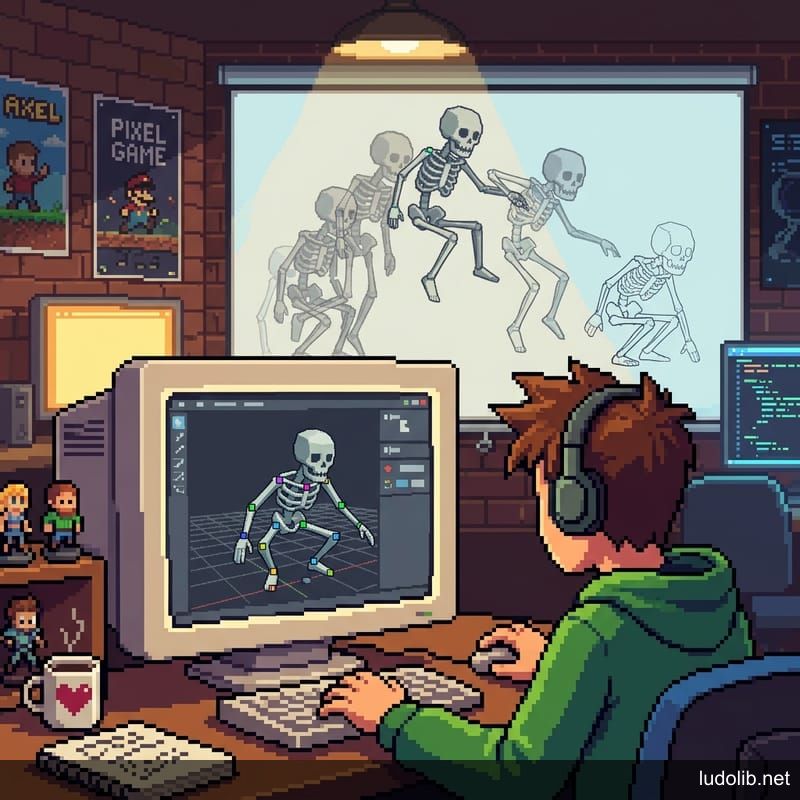
Types of Game Animation
| Type | Description |
|---|---|
| Character Animation | Walk, run, jump, attack, idle animations |
| Facial Animation | Expressions, lip sync, eye movements |
| Cinematic Animation | Story cutscene performances |
| Environmental Animation | Swaying trees, flowing water, rotating machinery |
| UI Animation | Menu transitions, button feedback, HUD elements |
Game Animation vs Film Animation
Game animation has unique constraints not present in film:
- Real-time playback: Animations must run at 60 FPS+ without pre-rendering
- State machines: Animations must blend seamlessly between states (idle → walk → run → jump)
- Responsiveness: Input must trigger animation changes within 1–2 frames for feel to be correct
- Locomotion systems: FK/IK blending for natural foot placement
Key Tools
- Maya: Primary character animation tool in AAA studios
- Blender: Common in indie development
- Spine: 2D skeletal animation for mobile games
- Unreal/Unity Animation Blueprints: State machine setup in engine