
🏕️ Party-Based RPG
Quick Summary
Party-Based RPG is an RPG game system where players simultaneously control and manage a team of characters (3 to 6 members) rather than a single individual. This structure expands tactical formation capabilities and enhances story interaction between members.
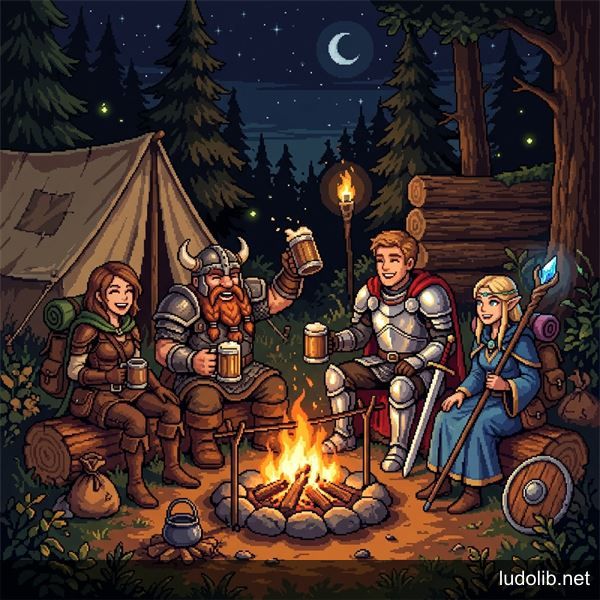
Party-Based (Team-based role-playing) is a term describing the central mechanic setup of an RPG game branch. In contrast to embodying a solitary character (like the Skyrim or The Witcher model), the system requires the operator to multitask the coordination of a team of independent specialized characters moving and fighting together simultaneously. Micro-level complexity increases — in exchange for infinite tactical variation potential.
CRPG Origins (Classic / Computer RPG)
The Party-Based branch almost always maintains intimate integration as the foundation for the major genre of CRPG. It was born with the mission of recreating the rules of the traditional Dungeons & Dragons (D&D) board game (typically applying the 3.5e or 5e rules system) in computer software display environments to simulate campaigns for groups deeply practicing team formation structures.
Two Core Values
1. Skill Synergy (Synergy Roleplay)
In the coordinated structure of the combat screen, the system demands establishing specialized tiers (Class):
- Classic examples: The Recovery system (Healer) supporting the back line, the Defense system (Tanker) blocking frontline damage, the Assassin system (Rogue/Thieves) specializing in independent attacks, and the Mage system generating environmental structural damage.
- The combat system, typically applying Turn-Based Role-Playing foundations, requires users to handle multiple characters — calculating chemical catalyst capability (like a Mage throwing a fireball into oil patches laid by another party member to spread fire damage across the environment).
2. Establishing Plural Personalities
Each NPC team member in these games is typically designed with independent emotional structure and moral ideology. Individuals react with agreement or conflict depending on how the player (party leader) makes decisions at crossroads events. A wrong management decision can lead to internal fractures — even having a character voluntarily leave the system, permanently taking their equipment during key mission sequences.
Representative Franchises
- Baldur’s Gate 3: The 2023 market sensation that set new limits on narrative branching variables (integrating millions of adaptive script lines) to define the development of a player-managed team across extreme situations.
- Dragon Age: Origins / Mass Effect: BioWare’s legacy brand standards specialized in in-depth team relationships and communication in both fantasy and science fiction settings.
Connections
Building the foundational NPC system demands a very costly level of professional concentration in the Narrative Design domain. Team members establish connections not just to provide combat stats, but also to provide multi-perspective social reactions in a world simulating the complexity of living behavioral interaction.