
🔓 Early Access
Quick Summary
Early Access is a game release model where developers sell the product to the public before it is fully complete. Players can play and provide feedback while the game is still in development.
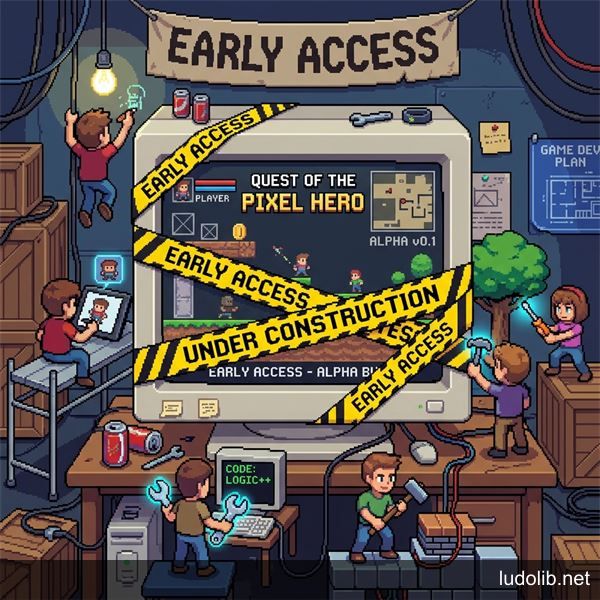
Early Access was pioneered largely by Steam as a distribution platform feature. It allows independent developers to generate revenue early to fund continued development — a sustainable alternative to traditional publisher funding.
Benefits of Early Access
- Revenue to fund development: Teams can keep working without waiting for a publisher deal or investment round.
- Real-world player feedback: Early community feedback can reshape balance, mechanics, or content direction before the full launch.
- Community building: Early adopters become brand advocates and vocal supporters at launch.
Notable Early Access Success Stories
- Minecraft (2009): Released in Alpha, generating enormous revenue before its full 1.0 launch in 2011.
- Hades (Supergiant Games): Launched in Early Access and used community feedback to refine difficulty and dialogue.
- DayZ, Rust, Subnautica: Multiple survival genre hits that thrived under this model.
Risks and Criticisms
- Games that overpromise and remain in Early Access indefinitely erode consumer trust.
- The term “Early Access” has been misused by developers as an excuse to release unpolished products.