
🎨 Light Scattering: The Magic of Translucency in Game Art
Quick Summary
In Digital Painting and 3D Game Graphics, Light Scattering (most commonly referring to Subsurface Scattering - SSS) is the phenomenon where light penetrates the surface of a translucent object, scatters within the material, and exits at different points. This technique is the “key” to creating the soft, lifelike quality of organic materials such as human skin, wax, jade, or foliage, preventing them from looking like hard plastic or metal.
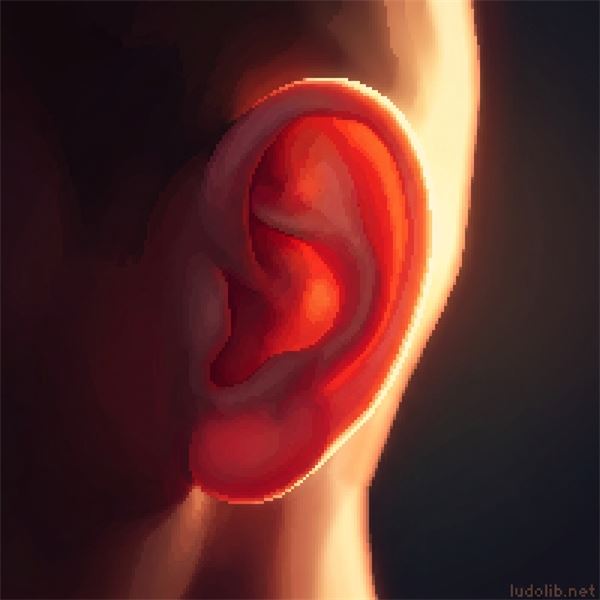 Illustration: Subsurface Scattering (SSS) causes the edge of light to glow with warm red/orange hues as it passes through a translucent material.
1. The Nature of Light Scattering (SSS)
When light hits a completely opaque object (like steel), it immediately reflects off the surface. However, when light hits a translucent object, it behaves differently:
- Penetrates the outer surface layer.
- Bounces and scatters continuously within the internal structure.
- Absorbs part of the material’s internal color spectrum (e.g., blood under the skin gives the light a red tint).
- Reflects back out, creating a highly saturated, glowing halo effect.
In computer graphics, this specific effect is called Subsurface Scattering (SSS).
2. Application in Digital Painting
For a Game Artist (Concept Artist, Illustrator), there is no need for complex physical calculations like in 3D software. Instead, artists create the illusion of SSS by manipulating color at the Terminator Line (the boundary between light and shadow):
| Area | Color Treatment for SSS Illusion |
|---|---|
| Light Area | Keep colors bright with moderate contrast against the environment. |
| Shadow Area | Shade with lower saturation, often mixing in ambient light colors. |
| Terminator Line | The crux of SSS. Paint a band of extremely high-saturation color (usually warm red, orange, or pink) right at the border where light transitions into shadow. |
| Backlighting | If the light source is behind the object (like an ear or fingertips), the thinnest edges will vividly glow with the color of the internal material (e.g., bright red ear rims). |
3. Application in 3D Rendering & Game Engines
Historically, calculating Subsurface Scattering was highly hardware-intensive. Today, modern Game Engines like Unreal Engine or Unity support real-time SSS using Screen-Space Subsurface Scattering (SSSSS) technology.
To set up an SSS Material in an engine, a Technical Artist typically configures these parameters:
- Base Color: The color of the outermost surface layer.
- Subsurface Color: The color of the internal tissue/material (often blood red for skin, or chlorophyll green for leaves).
- Scatter Radius: The distance light can travel inside the material before being completely absorbed. The more translucent the material, the larger this radius.
4. Atmospheric Scattering
Besides SSS (surface scattering), the term Light Scatter also refers to Atmospheric Scattering — the diffusion of light as it collides with dust particles, fog, or moisture in the air.
In Game Art and Level Design, this effect manifests as:
- God Rays (Crepuscular Rays): Shafts of sunlight piercing through foliage or windows.
- Bloom / Glow: A halo surrounding a strong light source in a dark environment, simulating scattering within the human eye or camera lens.
- Aerial Perspective: Distant objects lose detail and blend into the color of the sky/atmosphere (usually cyan/blue) due to light diffusion over long distances.
See Also
- Game Art — The general art discipline in games
- Game Engine — Real-time rendering tools
- Level Design — Environments utilizing heavy Atmospheric Scattering
- PBR (Physically Based Rendering) — Physical rendering systems that include SSS
References
- James Gurney, Color and Light: A Guide for the Realist Painter (2010).
- Unreal Engine 5 Documentation: Subsurface Profile Shading Model.