
💥 Sound Effects & Foley
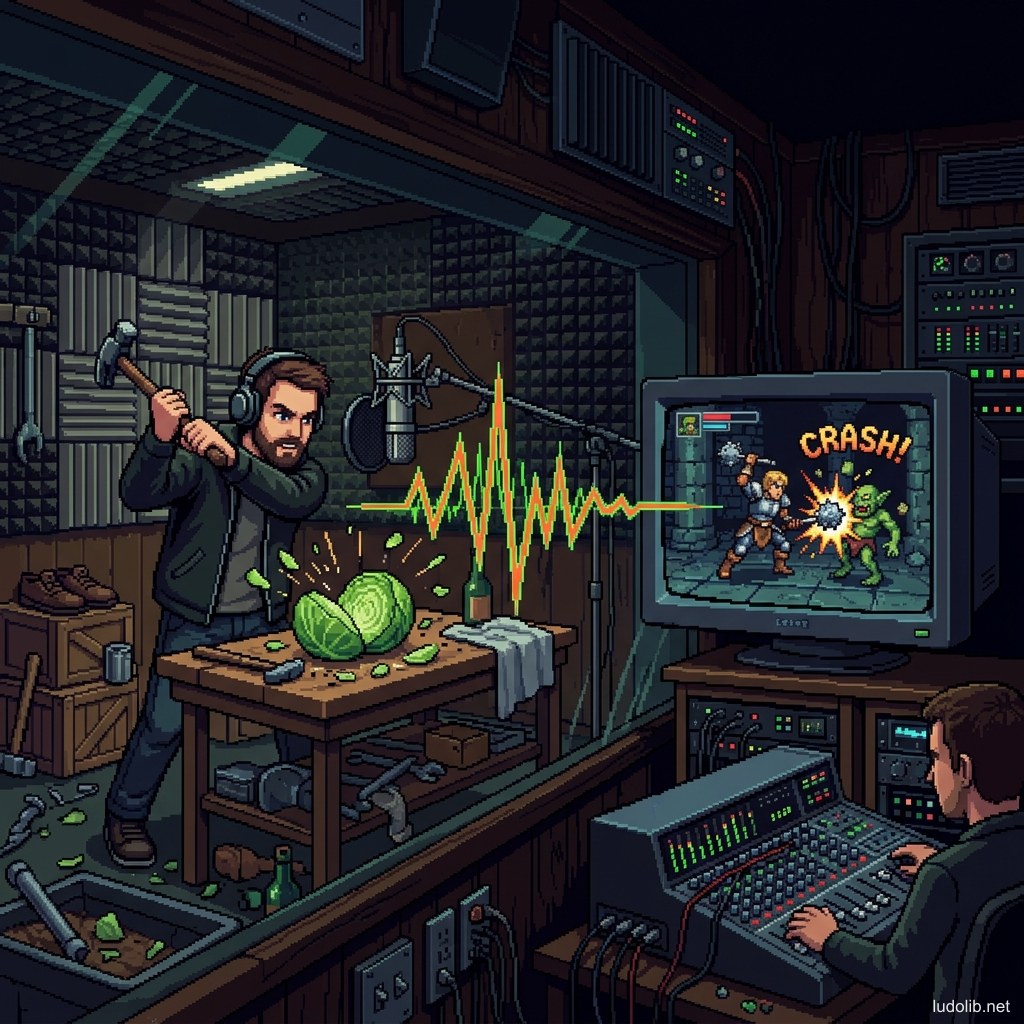 Illustration: A Foley artist working in a studio — using everyday objects to recreate the most realistic collision sounds.
Sound Effects (SFX) are short audio samples providing direct feedback for actions and events occurring in the game world (such as a gunshot, footsteps, an opening door, or the clinking of dropped coins).
SFX are the foundation of Weight and Game Feel. A sword swing that took hundreds of hours to animate will feel completely lifeless without a sharp whistling sound.
1. Sound Effects Classification
Foley (Practical Sound Effects)
A term borrowed from the film industry (named after Jack Foley). This is the art of manually recording physical sounds in a studio (Foley Stage) using everyday props.
- Classic examples: Crushing celery or walnuts to simulate bone breaking; slapping a watermelon half to create the sound of punching flesh; sprinkling salt on aluminum foil to simulate rain.
Synthesized / Designed Sound
Used for entities that don’t exist in real life: magic, alien space monster roars, plasma guns, or UI interaction sounds. These sounds are synthesized and distorted using software (Synthesizers).
2. SFX Layers in System Design
- Player SFX: All sounds produced by the player (breathing, footsteps on various surfaces, reloading). These are the most frequently repeated sounds, so they often require recording many variations to avoid irritating the listener’s brain.
- World & Ambience SFX: Sounds of the inanimate environment (night crickets, rustling dry leaves, creaking factory gears). They build the three-dimensional Space for Level Design.
- UI SFX: The “click” and “hover” sounds of the user interface. They need to be short, clear, and must not overpower other gameplay sounds.