
⚔️ Combat Designer
Quick Summary
Combat Designer is a specialized design role responsible for designing, implementing, and balancing the combat systems structure. They are the person in charge of fine-tuning frame data, physics hitboxes, and the combat pacing between the player and hostile AI environments.
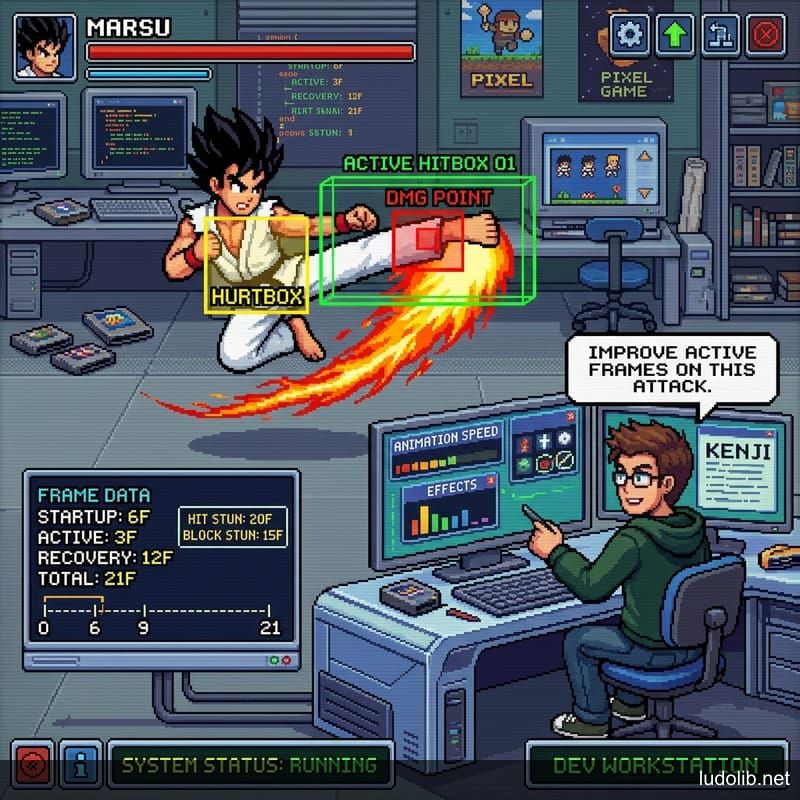
What Combat Designers Do
As a direct sub-branch of Game Design, the Combat Designer focuses on controlling the entirety of combat simulation mechanics. This role is especially prominent in real-time action genres that require high-reflex pacing, including Hack & Slash, Fighting games, or Soulslike titles.
The core goal of combat system design isn’t just randomly raising or lowering enemy AI stats; it’s the logical calculation of behavior patterns. It requires establishing temporal animation rules so players can find vulnerability windows, ensuring balanced but challenging difficulty experiences.
Key Responsibilities
- Frame Data Tuning: Defining exactly how many frames an attack takes to wind up (startup), do damage (active), and recover (recovery). This dictates the entire “feel” of a melee action game.
- Hitbox & Hurtbox Design: Precisely drawing the invisible collision boxes on weapons and characters so that a hit visually matches the mechanical outcome.
- Enemy Encounter Pacing: Working with Level Designers to combine specific enemy types that force players to use different strategies.
- Weapon/Skill Feel: Fine-tuning screen shake, hit stop, controller rumble, and input buffering to make every strike feel impactful.
Key Skills
- Extremely deep understanding of timing, spacing, and animation principles
- Experience with engine tools (Unreal Blueprints, Unity state machines)
- High player empathy and patience for microscopic iteration (adjusting a sword swing by 2 frames to make it feel “right”)