
📖 Valve Employee Handbook — The Flat Organization Model
Quick Summary
The Valve Employee Handbook (2012) is a publicly released document describing Valve’s radical flat organization — a management structure with no bosses, no hierarchy, and complete employee autonomy over which projects to work on. It is one of the most analyzed management documents in the tech industry.
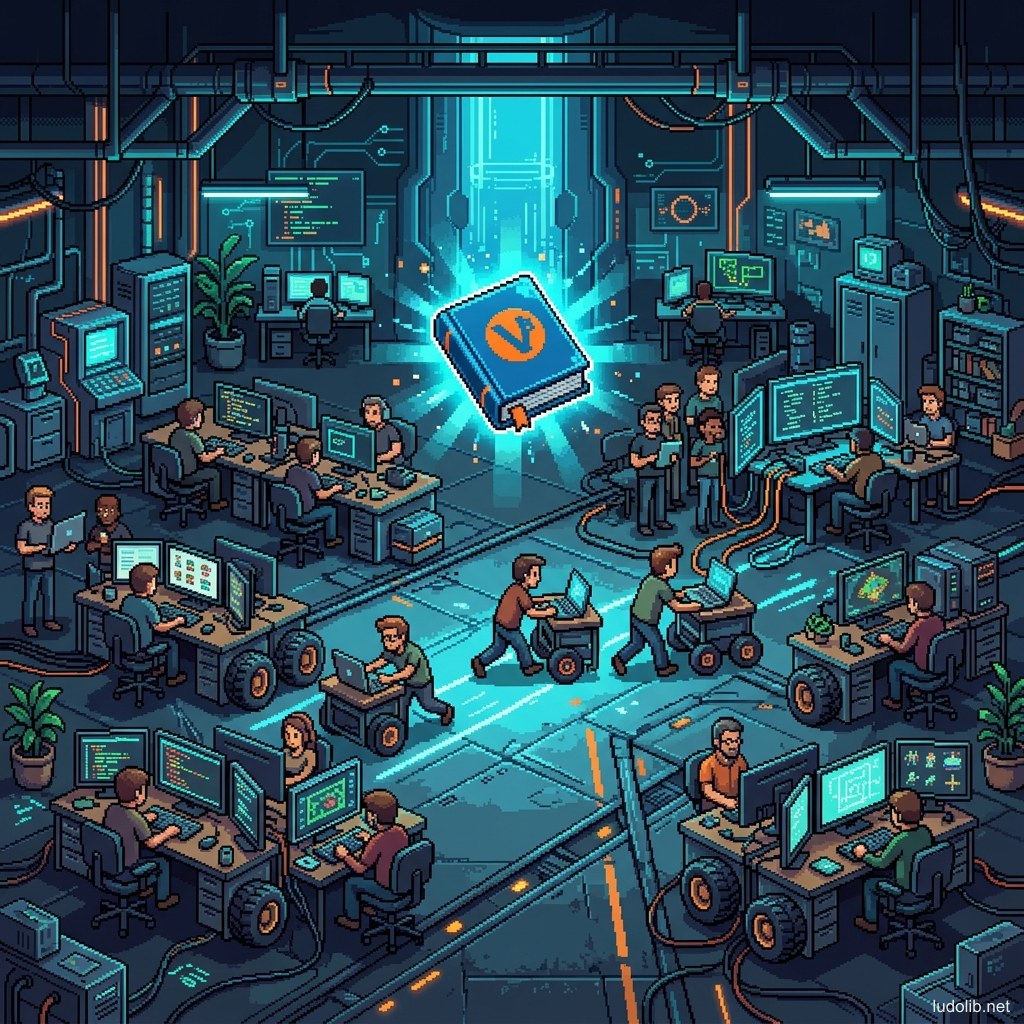
The original handbook PDF can be downloaded from Valve’s official website and remains one of the most-read internal company culture documents in the game industry.
Core Principles of the Flat Organization
1. No Bosses — Complete Autonomy
At Valve, there are no managers, no middle management, no formal hierarchy. Every employee decides what project to work on. If you want to join a team, you physically move your desk there.
This creates radical accountability: because no one can force you to work on something, your contributions entirely reflect your own judgment and initiative.
2. Desks on Wheels
A literal expression of organizational fluidity. Desks have wheels so employees can physically relocate to new project teams. Moving your desk signals commitment to a new project.
3. Hiring “T-Shaped People”
Valve specifically recruits people with:
- The vertical bar of the T: Deep expertise in at least one specialized domain (e.g., an outstanding physics programmer).
- The horizontal bar of the T: Broad knowledge enabling collaboration across multiple areas (e.g., also understanding Game Design, Narrative Design, and marketing).
4. Peer Review & Stack Ranking
Without managers to determine raises or promotions, Valve uses Peer Review:
- Once per year, employees interview each other to collect peer assessments.
- Then they perform Stack Ranking — ordering colleagues by 4 criteria:
- Technical skill / problem-solving ability.
- Productivity and actual output.
- Contribution to tooling and enabling others.
- Product vision and direction.
Compensation and bonuses are distributed automatically based on these rankings.
Strengths and Criticisms
Strengths
This model produced some of gaming’s most innovative products — Half-Life, Portal, Counter-Strike (acquired as a mod), and especially Steam, which dominates the PC gaming market. It attracts top talent and enables creative risk-taking impossible in corporate structures.
Weaknesses and Controversies
Former employees have identified significant downsides:
- “High School Cliquiness”: Without formal management, soft power concentrates in well-connected, charismatic individuals. Quieter people are systematically disadvantaged.
- Difficulty shipping new products: When no one can be assigned to unglamorous work (like late-stage bug fixing), critical tasks go undone. This partly explains why Valve has gone decades without releasing Half-Life 3.
References
- Valve Employee Handbook PDF (2012)
- Former employee Jeri Ellsworth’s interview on “The dark side of Valve’s flat structure” on Gamasutra.