
🐞 QA Tester
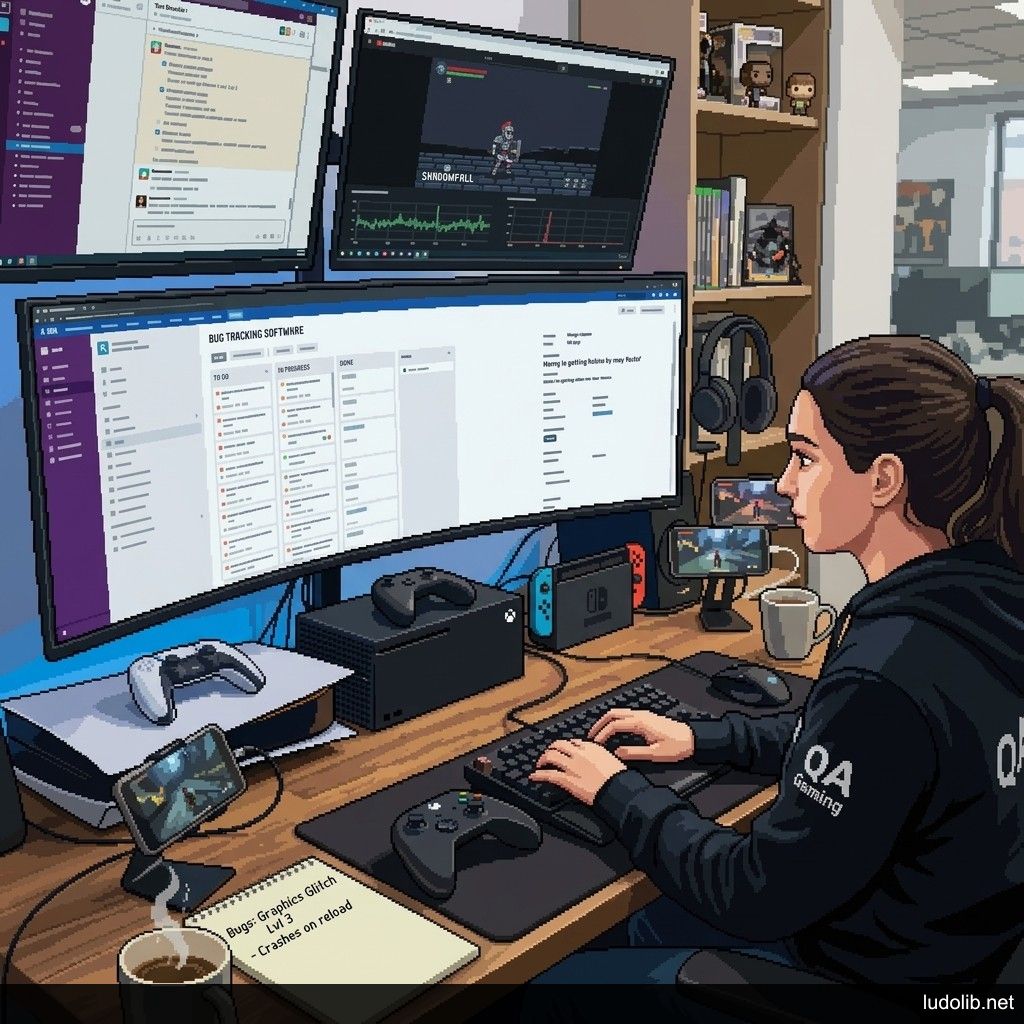
Quick Summary
QA Tester (Quality Assurance Tester) is the software verification department, responsible for simulating user scenarios to identify software bugs, performance issues, and unintended mechanical flaws before the product’s official release.
What QA Testers Do
Quality Assurance Testing is starkly different from playing a game for entertainment. QA Testing is an operational process of monitoring methodology by replicating the exact same controlled random scenario hundreds of times (stress testing). The goal is to isolate graphical glitches, map collision gaps, or identify performance limits (e.g., Out Of Memory leaks).
“A QA Tester is not there to experience the product’s content. Their job requires methodically breaking the software’s operational logic.”
Types of Testing
1. Functional Testing
Confirming every feature works exactly according to the design document:
- Does the “New Game” button open the correct screen?
- Does Skill A deal the exact damage specified in the spreadsheet?
2. Regression Testing
After a developer fixes a bug, checking if that fix created a new bug elsewhere. This loop happens hundreds of times in a project.
3. Compatibility & Performance Testing
Running the game on all target devices: every PC GPU family, every console generation, every iOS/Android version. Measuring FPS, load times, and RAM/battery drain to identify performance hotspots.
4. Compliance Testing
Every platform (PlayStation, Xbox, Nintendo, Apple) has a strict set of Technical Requirements (TRC/TCR/LotCheck) the game must pass before distribution. QA ensures 100% compliance.
The Bug Report Lifecycle
A professional Bug Report includes:
- Title: Brief bug description
- Steps to Reproduce: Exact steps so the developer can trigger the bug themselves
- Actual vs Expected Result: What it did vs what it should do
- Severity: Critical / Major / Minor / Trivial
- Attachments: Screenshot, video, or save file of the moment the bug occurred
Career Path
QA is one of the most accessible entry points into the game industry. Many current Game Designers, Producers, and Programmers started their careers in QA — because no role provides a better understanding of how a complete game functions under the hood than breaking it every day.